



The Increasing Risk of Undiagnosed High Blood Pressure in Young Adults
Hypertension (high blood pressure) is a global health issue, affecting an estimated 1.4 billion adults aged 30–79 years worldwide. Including in the UK, where an estimated 30% of adults have hypertension, with about half of those being unaware or not receiving treatment; around 5 million people. With increased blood pressure comes increased risk of poor health: hypertension is responsible for more than half of all strokes and heart attacks in the UK, as well as being a risk factor for heart disease, kidney disease and vascular dementia.
Much of the focus on hypertension diagnosis and prevention is geared towards older individuals in middle and later life, primarily because aging is a considerable risk factor for development of this condition. However, alongside ageing, obesity, eating an unhealthy diet and a lack of exercise are also considerable risk factors. The issue? In the modern world, young people are leading increasingly sedentary and unhealthy lifestyles, built on convenience, which is leading to a rise in obesity and other health conditions, such as high blood pressure, which is often hidden. To compound this problem, lifestyle behaviours learned in childhood are often carried into adolescence, with behaviours that are linked to poor health outcomes unlikely to be changed. In terms of blood pressure? A higher blood pressure in adolescence is associated with higher risk of premature death. According to research presented at the American Heart Association Hypertension Scientific Sessions 2025 and also published in JAMA, children who had higher blood pressure at age 7 were more likely to die early from cardiovascular disease by their mid-50s.
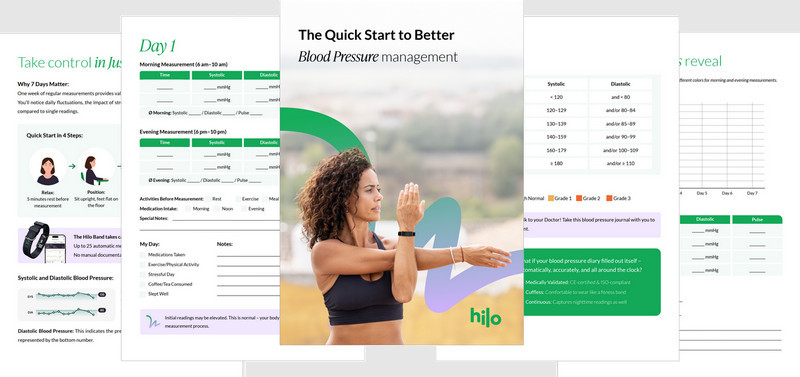
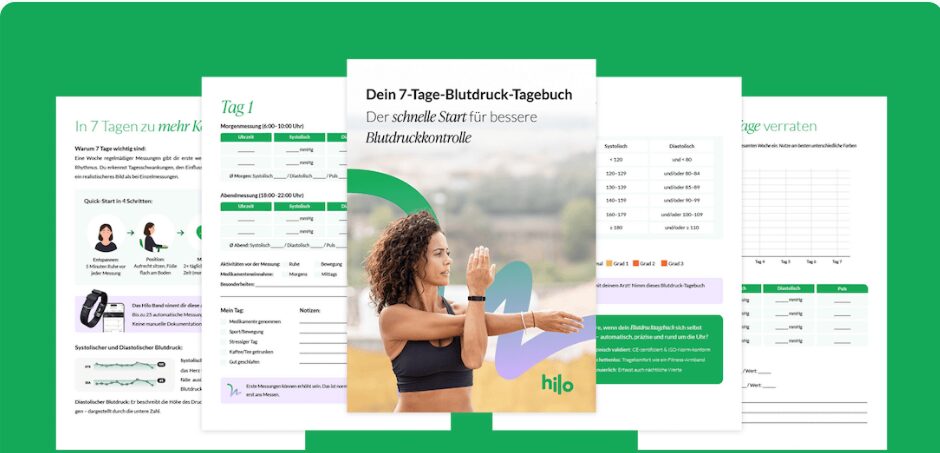
Understand Your Blood Pressure Patterns in a Week
Want to get a better handle on your blood pressure? Our 7-day notebook helps you see which factors truly influence it. Be perfectly prepared for your next doctor’s appointment – includes an evaluation guide and conversation starters.
High Blood Pressure and the Growing Number of Undiagnosed Young Adults
In the UK, you’re usually considered to have high blood pressure if your reading is 140/90 or higher when checked by a healthcare professional or 135/85 or higher when checked at home. These larger and smaller numbers have different meanings:
- The larger number is your systolic blood pressure, and is the pressure exerted on the walls of your blood vessels when your heart contracts, or beats.
- The smaller number is your diastolic blood pressure, and is the pressure exerted on the walls of your blood vessels when your heart is at rest and is filling with blood.
The systolic blood pressure shows how hard your heart has to work to pump blood around your body, with a larger number meaning more pressure is required. The higher pressure puts extra strain on your arteries and your heart, which can lead to strokes, heart attacks and other health problems.
Hypertension in youth is still relatively rare, with prevalence and diagnosis linked to age: 9% of adults aged 16 to 44 have a diagnosis, compared to 60% of adults aged 65 and over. However, just because a condition is rarer in youth does not mean that there is no risk, or that if you have it, it’s safer. It’s not. Health risks for children with hypertension are similar to those for adults, and include higher risk of stroke, heart attack, heart failure and kidney disease.
Why is High Blood Pressure in Young Adults So Dangerous?
As noted earlier, high blood pressure at a young age can lead to increased risk of serious health issues such as stroke and heart attack. The causes are similar to those for adults: either through lifestyle or genetics and underlying health conditions.
Lifestyle issues that can cause hypertension in children can include being overweight or obese, a family history, diabetes or eating too much salt. This is more often seen in children aged 6 or over. In alignment with adults, hypertension in youth can also be an indicator for underlying health conditions such as chronic kidney disease, polycystic kidney disease, heart problems, adrenal disorders and an overactive thyroid (hyperthyroidism), among others.
While hypertension caused by underlying health conditions can be unavoidable, hypertension caused by lifestyle factors is largely avoidable, and development of hypertension in youth can have significant impact on health outcomes in later life. For example, a study published in the journal Hypertension states that ‘higher BP at a young age is associated with abnormalities on heart and brain imaging and increases the likelihood of cardiovascular events by middle age. However, diagnosis rates are lower, and treatment is often delayed in young people’.
In fact, research from a study at Northwestern University, published in JAMA, has shown that ‘adults who develop high blood pressure before the age of 40 are at a significantly higher risk for heart disease, stroke and other cardiovascular events later in life, compared to those who maintain normal levels.’ The team showed that young adults with only slightly elevated blood pressure before the age of 40 had a 67% increased risk of cardiovascular event in the study period of 19 years, and those with clinical hypertension had a two- to three-fold increase in risk of adverse cardiovascular events in the study period.
The Diagnosis Gap
While there has been much research into the outcomes of high blood pressure in youth, less attention has been paid to attitudes among young people when it comes to blood pressure. In our 2025 Hilo Report, we probed the British public’s awareness, understanding, and perceptions of the risks associated with hypertension. In particular, this work uncovered some key insight relating to young peoples’ attitudes towards hypertension. For example:
- Younger people were less likely to measure their blood pressure or understand its long-term health implications, such as the increased risk of serious disease;
- Younger adults, those on lower incomes were less likely to have measured their blood pressure in the past month or own a blood pressure monitor;
- 39% of young adults aged between 16 and 24 thought that there are obvious symptoms and that they could ‘feel’ when blood pressure was high. (To clarify, this is not the case and the only way to determine blood pressure is to measure it using a medically approved device);
However, we also found that regular monitoring of blood pressure could encourage people to take better care of their heart health, and positively influence behaviour, especially among the young.
What Can Be Done?
High blood pressure doesn’t discriminate and affects people of just about any age group, even young adults. The issue is that younger people are less likely to consider blood pressure to be an issue, and are less likely to regularly take measurements – and that could have an impact into adulthood.
Using a medical-grade device, such as a Hilo Band, to monitor blood pressure continuously can provide significant insight into your overall health and, in some cases, drive meaningful change in behaviour. Key for young adults is awareness: knowledge is power, and with that knowledge comes the ability to positively influence health in later life.
Lifestyle Changes
In addition to regular blood pressure monitoring, adopting a healthy lifestyle is crucial for helping to prevent hypertension in the long run.
Salt
One of the easiest ways to make a positive lifestyle change is by consciously avoiding salt or overly salty foods. The NHS recommends that salt consumption (sodium chloride, specifically) is restricted to 6 grams each day, approximately one teaspoon. Alongside stopping physically adding salt to your food, these strategies can also help:
- When grocery shopping, read food labels to determine salt content. And remember to look at the serving size!
- Avoid processed foods as they are packed with salt.
- Control the amount of salt in your food by making more home-cooked meals instead of dining out at restaurants or getting take out.
- Lower high blood pressure by up to 11 mm Hg by consuming a fiber-rich, low-saturated fat, low-cholesterol diet containing whole grains, fruits, and vegetables.
Exercise
Get more exercise. The NHS recommends engaging in 150 minutes of moderate aerobic exercise per week (spread over 5 to 7 days), such as cycling or fast walking. The Hilo Band’s step counter makes it easy to track whether you’re hitting this target. It passively records your daily movement and shows how your activity levels affect your blood pressure, even in your 20s and 30s. More recently, research has suggested that isometric exercises, such as wall squats and planks, are also good for lowering blood pressure.
Smoking and alcohol
Stopping smoking and only consuming alcohol in moderation, which means a maximum one drink a day for women or two drinks a day for men, can also have a positive impact on your health. Be mindful about the size and type of your drink though! One standard drink can differ based on its alcohol by volume (ABV) percentage, so make sure you check the units.
Stay informed about the latest advancements in blood pressure monitoring technology and take control of your health. Sign up for our newsletter now!
Regular Monitoring
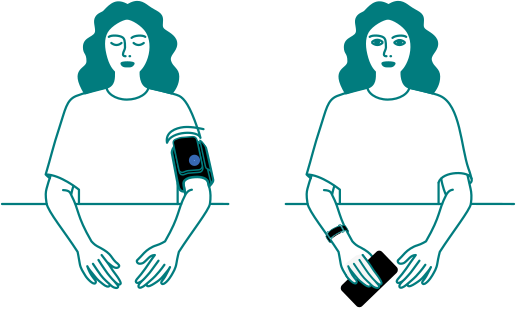
Everyone, even young adults, should take a proactive approach to blood pressure health with regular monitoring, especially those with a family history of high blood pressure. For many people, high blood pressure does not present any symptoms and, as a result, can go undiagnosed for many years. That’s why Hilo have developed a wearable blood pressure monitor that allows 24/7 blood pressure readings without the user needing to do anything (other than sit still for a couple of minutes!).
With easy and convenient monitoring using our optical blood pressure measuring technology, anyone, including young adults, can gain a comprehensive blood pressure reading anytime and improve their overall health.
Learn more about the Hilo Band and how it works today.
Disclaimer: “The information in this article is intended for educational purposes only and does not replace medical advice. If you suspect hypertension or are worried about your blood pressure, speak to your doctor. They can advise on the best way to effectively manage it.”
Sources:
Hypertension. World Health Organisation. https://www.who.int/news-room/fact-sheets/detail/hypertension (Accessed December 2025)
Blood Pressure Facts and Figures. Blood Pressure UK. https://www.bloodpressureuk.org/news/media-centre/blood-pressure-facts-and-figures/ (Accessed December 2025)
One in eight toddlers and primary school aged children obese. National Health Service (NHS), UK. https://www.england.nhs.uk/2024/09/one-in-eight-toddlers-and-primary-school-aged-children-obese/ (Accessed December 2025)
Higher blood pressure in childhood linked to earlier death from heart disease in adulthood. American Heart Association. https://newsroom.heart.org/news/higher-blood-pressure-in-childhood-linked-to-earlier-death-from-heart-disease-in-adulthood (Accessed December 2025)
A. A. Freedman; A. M. Perak; L. M. Ernst et al. (2025). High Blood Pressure in Childhood and Premature Cardiovascular Disease Mortality. JAMA, 334, 17, 1555. https://doi.org/10.1001/jama.2025.14405
High Blood Pressure. National Health Service (NHS), UK. https://www.nhs.uk/conditions/high-blood-pressure/ (Accessed December 2025)
High blood pressure in children. Mayo Clinic. https://www.mayoclinic.org/diseases-conditions/high-blood-pressure-in-children/symptoms-causes/syc-20373440 (Accessed December 2025)
T. C. Hinton; Z. H. Adams; R. P. Baker; K. A. Hope; J. F.R. Paton; E. C. Hart; A. K. Nightingale (2019). Investigation and Treatment of High Blood Pressure in Young People: Too Much Medicine or Appropriate Risk Reduction? Hypertension, 75, 1, 16.
https://doi.org/10.1161/HYPERTENSIONAHA.119.13820
High Blood Pressure Before Age 40 Linked to Heart Disease. Northwestern Medicine. https://news.feinberg.northwestern.edu/2018/11/26/high-blood-pressure-before-age-40-linked-to-heart-disease/ (Accessed December 2025)
Y. Yano; J. P. Reis; L. A. Colangelo et al. (2018). Association of Blood Pressure Classification in Young Adults Using the 2017 American College of Cardiology/American Heart Association Blood Pressure Guideline With Cardiovascular Events Later in Life. JAMA, 320, 17, 1774. https://doi.org/10.1001/jama.2018.13551
Uncovering the UK’s Blood Pressure Divide: A Nation Under Pressure. Hilo. https://hilo.com/uk/bp-report-2025/ (Accessed December 2025)
Hilo Band. Hilo. https://hilo.com/uk/blood-pressure-monitor/ (Accessed December 2025)
Salt in your diet. National Health Service (NHS), UK. https://www.nhs.uk/live-well/eat-well/food-types/salt-in-your-diet/ (Accessed December 2025)
S. P. Jurasche; E. R. Miller; C. M. Weave; L. J. Appel (2017). Effects of Sodium Reduction and the DASH Diet in Relation to Baseline Blood Pressure. JACC, 70, 23, 2841. https://doi.org/10.1016/j.jacc.2017.10.011
Can Wall Squats and Planks Lower Your Blood Pressure? British Heart Foundation. https://www.bhf.org.uk/informationsupport/heart-matters-magazine/news/behind-the-headlines/can-planks-lower-blood-pressure (Accessed December 2025)
Understanding the true impact of smoking. National Health Service (NHS), UK. https://www.nhs.uk/better-health/quit-smoking/why-quit-smoking/understanding-the-true-impact-of-smoking/ (Accessed December 2025)
Does alcohol raise blood pressure? British Heart Foundation. https://www.bhf.org.uk/informationsupport/heart-matters-magazine/nutrition/ask-the-expert/does-alcohol-raise-blood-pressure (Accessed December 2025)
Blood Pressure and Alcohol: What You Should Know. Hilo. https://hilo.com/uk/art/can-red-wine-really-help-to-lower-blood-pressure/ (Accessed December 2025)
Hilo: How it works. Hilo. https://hilo.com/uk/how-it-works/ (Accessed December 2025)