High blood pressure (hypertension) is a leading cause of cardiovascular disease and premature death, affecting over 1.40 billion adults aged 30–79 years globally. While hypertension can be both diagnosed and treated fairly easily, approximately 5.5 million people in England have hypertension without even knowing. In fact, it’s often referred to as a ‘silent killer’, being a substantial risk factor for a range of other conditions including vascular dementia, heart failure and stroke.
Age, ethnicity, medication, stress, weight and diet can all affect your risk of developing high blood pressure. While some of these factors are outside of your control, such as age and ethnicity, others can be managed, for example diet and exercise. This is even more important if you have a genetic predisposition towards hypertension – either through race (those with black Caribbean, black African and Pakistani heritage are most at risk) or genetic conditions, such as polycystic kidney disease – or you’re over the age of 65.
To see how Hilo is helping those with genetic conditions monitor their blood pressure, read our article and watch our video about Hanspeter Meier, who was diagnosed with polycystic kidney disease (PKD), having inherited it from his mother.
Socioeconomic disparity: the hidden risk factor
However, there’s also another risk factor that’s not often discussed and is being exacerbated by the cost-of-living crisis: the socioeconomic group to which you belong.
In high-income countries, diet quality and health status are strongly correlated with socioeconomic status: those on lower incomes are much more likely to be obese and are therefore at increased risk of developing high blood pressure. Worryingly, the reasons for this are not necessarily related to a lack of knowledge or understanding, with economics and affordability playing a substantial role. Put simply: eating a healthy diet is more expensive.
According to the Eatwell Guide, the poorest fifth of the UK population need to spend 47% of their disposable income to consume a healthy diet. In contrast, this is only 11% for the richest fifth. And the effects of this are not only seen on adults, with children feeling the impact.
The Royal College of Pediatrics and Child Health have shown that there are key differences in the prevalence of obesity in children between high income and low income areas, with clear differences becoming apparent right from Year R. More concerningly, by Year 6 the rate of obesity is over twice as high among children living in the most deprived areas (29.2%) as among children living in the least deprived areas (13.0%). The kicker? Childhood food experiences and diet often inform adult eating habits in later life.
For more information about how socioeconomic inequality can link into the likelihood of high blood pressure, see our report, A Nation Under Pressure: Uncovering the UK’s Blood Pressure Divide.
While we can’t address the social inequalities brought about by economic status, we can give information relating to how different foods can impact your blood pressure to help you reduce your risk.
This article will give an overview of different dietary strategies that can help your blood pressure stay on track, alongside some simple recipes for preparing delicious, heart-healthy meals.
Can food reduce blood pressure?
Controlling diet and exercise, with a view to controlling blood pressure, are well-known to provide protection from developing serious conditions such as heart disease, heart failure, dementia and kidney disease. In fact, dietary changes are at the forefront of hypertension management and have been shown to be as effective as taking prescription medications. Importantly, small changes, such as cutting back on sodium (table salt) intake and alcohol consumption, can help keep your blood pressure within healthy limits, and it’s been repeatedly shown that adopting a heart-healthy diet that’s rich in foods known to reduce blood pressure can lead to long-term health benefits.
Doctors often recommend switching your diet as the first step in the treatment of high blood pressure, but which foods are healthful and which should you avoid?
Foods that reduce blood pressure
Certain foods are packed with nutrients and compounds known to support heart health and regulate blood pressure. Key dietary components include:
- Potassium: Found in bananas, avocados, and potatoes. Potassium helps maintain healthy blood pressure levels by encouraging excretion of sodium and easing tension in blood vessel walls.
- Magnesium: Present in spinach, almonds, and salmon. It is thought that magnesium stimulates production of prostacyclin and nitric oxide, which can cause blood vessel relaxation.
- Arginine: Found in turkey, soybeans, and lentils. Arginine is crucial for producing nitric oxide, which is known to widen blood vessels (vasodilation).
- Omega-3 fatty acids: Present in foods like chia seeds, salmon, and walnuts. Omega-3 fatty acids are thought to have a vasodilatory effect in smooth muscle cells.
Foods to avoid
Alongside incorporating blood pressure-lowering foods, it’s essential to limit intake of sodium-rich, saturated fat-laden and cholesterol-heavy foods. Processed snacks, cured meats and high-fat dairy products should all be consumed sparingly.
- Salty or processed foods can be damaging to your heart health and are known to increase blood pressure. It’s recommended that adults eat no more than 2.4 g of sodium per day, which equates to 6 g of table salt (NaCl).
- Saturated fat is mostly found in products sourced from animals, such as meat and dairy, although it’s also present in some plant-based foods such as palm oil and coconut oil. Eating too much saturated fat can raise the levels of low-density lipoprotein (LDL) in your blood, which is a type of cholesterol that can increase your risk of heart disease and stroke. The recommended daily intake of saturated fat is no more than 30 g for men and 20 g for women.
- High cholesterol is one of the leading causes of heart disease. Cholesterol is mainly made in your liver, but is also found in animal products such as meat, dairy, shellfish and eggs. If you have hypertension, avoiding these foods may help to reduce your blood pressure. Eggs on the other hand, although containing cholesterol have actually been shown to not raise the cholesterol level in blood.
- Alcohol increases blood pressure temporarily, with the effects usually wearing off once your liver has processed your intake. However, moderate alcohol consumption has been linked to increased blood pressure, making it necessary to limit intake.
In addition to dietary modifications, lifestyle adjustments such as stress reduction and regular exercise also contribute to optimal blood pressure levels.
Dietary changes to manage blood pressure
Rather than just adding or removing foods from their diet, some people prefer to follow specific diet plans for their heart health. Outlined below are overviews of three popular dietary changes that can help manage your blood pressure.
The DASH Diet
Whether you’ve been diagnosed with hypertension or you’re simply looking for preventative measures to maintain healthy blood pressure, you may have heard of the Dietary Approaches to Stop Hypertension diet, commonly referred to as the DASH diet.
The DASH diet, which has been shown to be effective through a substantial body of research, focuses on whole foods abundant in potassium, calcium and fibre, while minimising sodium, saturated fat and added sugar intake. It’s generally known as a balanced and sustainable eating pattern suitable for long-term blood pressure management.
The DASH diet is based on eating healthy, whole foods and reducing the intake of processed foods that are high in sodium, added sugar and saturated fat. Instead of forcing unrealistic eating habits, it provides your body with the healthy nutrients it needs to function properly by encouraging you to eat a wide range of different food types.
The main types of foods incorporated in the DASH diet include:
- Fruits and vegetables
- Beans, legumes and pulses
- Whole grains
- Lean meats, fish and poultry
- Low-fat dairy products
This diet has been seen to lower blood pressure in both healthy people and those with high blood pressure, making it a great preventative option for those with a medical or genetic predisposition to hypertension.
The detox diet
A detox diet is usually followed to either remove ‘toxins’ from the body or to eat ‘cleanly’, for example by only consuming raw vegetables. These diets often claim to make a person healthier – with claims ranging from promoting weight loss to curing cancer – and may be accompanied by celebrity endorsements. However, these health benefits need to be considered carefully, as sometimes there is little or no evidence to back them up. If in doubt, speak to your healthcare professional.
A detox diet may involve:
- Cutting out certain foods
- Only drinking liquids
- Only eating at certain times of the day (fasting)
- Taking supplements
Some types of detox diets promote ‘clean’ eating, focusing on whole foods like fruits, vegetables, wholegrains and lean proteins, while reducing or eliminating the intake of processed foods, sugar and alcohol.
However, depending upon the “detox diet” that you follow, the effectiveness and safety significantly vary. Doctors often advise against following highly restrictive diets, particularly if they focus on unidentified ‘toxins.’ There is no scientific evidence that our bodies need to ‘detox’ as the body is designed to repair itself and filters out waste products naturally through your liver and kidneys.
Strictly cutting out certain foods may provide the desired outcome in the short term, but these effects are often short-lived or reversed once one returns to a regular diet. If followed for long periods of time, a restrictive detox diet has potential to cause malnutrition, unhealthy eating habits, and long-term health problems.
That said, a diet-led approach to reducing blood pressure can deliver results without the need for medication, but you should discuss this with your healthcare professional first as they will be able to advise you about following a safe and healthy diet that will meet your nutritional needs.
Stay up to date with the latest nutrition techniques for blood pressure and take control of your heart health. Subscribe to our newsletter now!
The plant-based food diet
Although eating more vegetables isn’t necessarily a diet plan, making an active effort to incorporate more vegetables in your diet may help lower your blood pressure over time. This is because vegetables are high in potassium but low in sodium, with the reduction in sodium being key to lowering blood pressure. They’re also rich in nitrates, which are known to help manage hypertension.
A study in JAMA Internal Medicine found higher vegetable consumption linked to lower blood pressure in over 4,500 participants, with those consuming more vegetables having a lower risk of hypertension. Incorporating nitrate-rich vegetables like beetroot, garlic, broccoli, and cauliflower into your diet can support hypertension management.
Tracking your progress
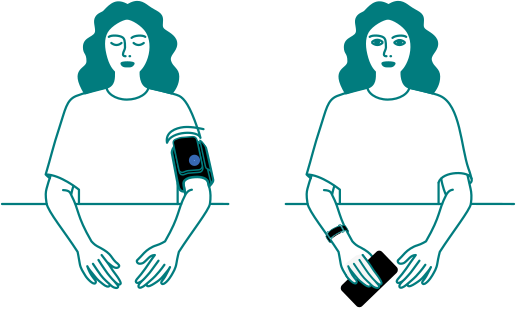
Regularly checking your blood pressure is key to staying on track and will help you to see whether the changes you have made to your diet are working. Innovative devices like Hilo’s lightweight, waterproof monitor offer convenient monitoring, especially for individuals aged 65 and above. Our blood pressure monitor buying guide is a great resource for those looking to keep an eye on their blood pressure from the comfort of their own home.
Easy recipes to lower blood pressure
Simple recipes that can lower cholesterol and help maintain healthy blood pressure are outlined below.
Vegetable soup
Vegetable soup is low in sodium and high in potassium. The vegetables in this soup are also a good source of fibre. The recipe below is for 8 servings.
Ingredients:
- 1 tablespoon olive oil
- 1 large chopped onion
- 3 minced garlic cloves
- 1 chopped red bell pepper
- 1 teaspoon of dried oregano
- 4 cups chicken or vegetable broth
- 1 can (14.5 ounces) of diced tomatoes
- 1 can (15 ounces) kidney beans
- 1 can (15 ounces) black beans, rinsed and drained
- 1 can (15 ounces) chickpeas
- 1 can (15 ounces) white beans
- 1/2 teaspoon salt
- 1/4 teaspoon black pepper
- 1 cup frozen corn
- 1/2 cup chopped fresh parsley
- 1/2 cup of chopped fresh coriander
- 2 tablespoons of fresh lemon juice
Instructions:
- In a large pot, heat the oil over medium heat. Add the onion, garlic, and bell pepper. Gently sweat together for about 5 minutes, after which time the onion will become transparent.
- Stir in the oregano and broth. Add the tomatoes with their juice, kidney beans, black beans, chickpeas, white beans, salt, and black pepper. Bring to a simmer then stir in the corn, parsley, coriander and lemon juice. Cook until the vegetables are tender, which will take about 5 minutes.
- Serve hot with crusty bread.
Spicy black bean soup
Black bean soup is a popular soup and is often served with various vegetables, such as carrots, onions, and celery, and can be either vegetarian or include meat.
Black bean soup has been shown to have a beneficial effect on blood pressure. In a study published in the Journal of the American College of Nutrition, consumption of beans was found to improve overall nutrient intake levels, improve body weight profile, improve waist circumference data, and lower systolic blood pressure in comparison with non-consumers.
Ingredients:
- 1 tablespoon olive oil
- 1 large onion diced
- 3 cloves garlic minced
- 1 red bell pepper diced
- 1 teaspoon ground cumin
- 1 teaspoon smoked paprika
- 1 teaspoon chilli powder
- 4 cups vegetable broth
- 1 (14.5 ounce) can diced tomatoes undrained
- 1 (15 ounce) can black beans rinsed and drained
- 1 (4 ounce) can diced green chillies, undrained
- 1 teaspoon chopped fresh coriander
- 1 teaspoon lime juice
- 1/4 teaspoon salt
- 1/4 teaspoon black pepper
Instructions:
- Heat the oil in a large saucepan over medium heat. Add the onion, garlic, and bell pepper and gently sweat together for about 5 minutes, after which time the onion will become transparent. Add the cumin, paprika, chilli powder, broth, tomatoes, black beans, green chillies, coriander, lime juice, salt, and black pepper. Bring to a simmer and cook for 10 minutes.
- Serve hot with crusty bread.
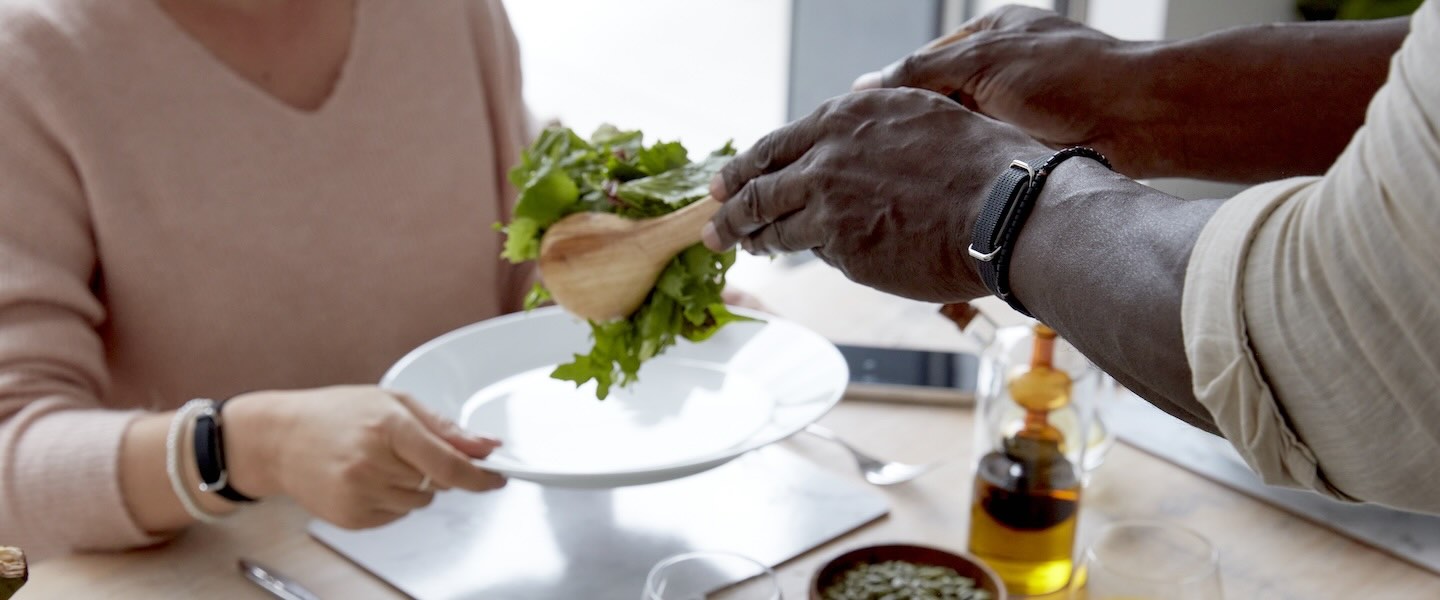
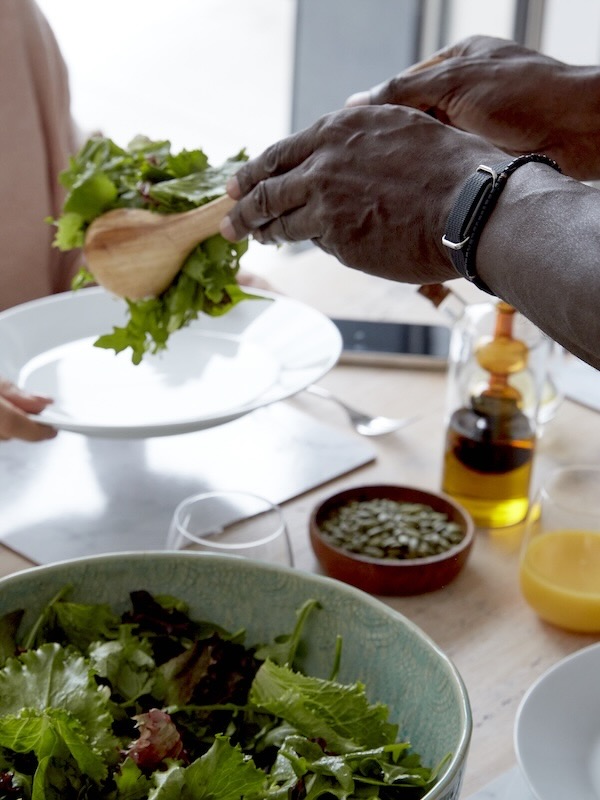
Garden salad
Salads are low in calories and high in fibre, vitamins, and minerals. Including a salad with every meal can help you maintain a healthy weight and lower your blood pressure.
Ingredients:
- romaine lettuce
- spinach
- tomatoes
- cucumber
- carrot
- red onion
- feta cheese
- balsamic vinegar
- extra virgin olive oil
- garlic
- salt and peppers of your choice
Instructions:
- Start by washing your vegetables with fresh water.
- Chop the romaine lettuce, spinach, tomatoes, cucumbers, and carrots into bite-sized pieces.
- Finely chop the red onion.
- Crumble the feta cheese.
- In a small bowl, whisk together the balsamic vinegar, extra virgin olive oil, garlic, salt, and pepper.
- Pour the dressing over the salad and toss to combine.
- Serve immediately.
The bottom line
Harnessing the power of nutrition and lifestyle choices can significantly impact blood pressure levels and overall cardiovascular health. By prioritising whole, nutrient-rich foods and utilising innovative monitoring technology like Hilo’s blood pressure monitoring system, you can take proactive steps towards managing hypertension and improving well-being.
Disclaimer: If you are concerned about your blood pressure, it is best to speak to your doctor. They can advise on the best way to manage your blood pressure.
Sources:
Hypertension. World Health Organization. https://www.who.int/news-room/fact-sheets/detail/hypertension (Accessed December 2025)
CVD prevention: detecting and treating hypertension. National Institute for Health and Care Excellence. https://stpsupport.nice.org.uk/cvd-prevention-hypertension/index.html (Accessed December 2025)
High Blood Pressure. National Health Service (UK). https://www.nhs.uk/conditions/high-blood-pressure/ (Accessed December 2025)
Health Survey England Additional Analyses, Ethnicity and Health, 2011-2019 Experimental statistics. National Health Service (UK). https://digital.nhs.uk/data-and-information/publications/statistical/health-survey-england-additional-analyses/ethnicity-and-health-2011-2019-experimental-statistics/blood-pressure (Accessed December 2025)
Help! I need a kidney! Hanspeter’s story. Hilo. https://hilo.com/uk/art/living-with-pckd-blood-pressure-kidney-transplant/ (Accessed December 2025)
Health Survey for England, 2021 part 2. National Health Service (UK). https://digital.nhs.uk/data-and-information/publications/statistical/health-survey-for-england/2021-part-2/adult-health-hypertension (Accessed December 2025)
A. Johnstone; M. Lonnie (2023). The cost-of-living crisis is feeding the paradox of obesity and food insecurities in the UK. Obesity, 31 (6), 1461. https://doi.org/10.1002/oby.23740
F. Eskandari; A. A. Lake; K. Rose; M. Butler; C. O’Malley (2022). A mixed-method systematic review and meta-analysis of the influences of food environments and food insecurity on obesity in high-income countries. Food Sci. Nutr., 10 (11), 3689. https://doi.org/10.1002/fsn3.2969
Obesity. British Heart Foundation. https://www.bhf.org.uk/informationsupport/risk-factors/obesity(Accessed December 2025)
The Broken Plate 2022. The Food Foundation. https://foodfoundation.org.uk/publication/broken-plate-2022 (Accessed December 2025)
RCPCH: Action needed on poverty and high sugar products as childhood obesity rates persist. Royal College of Pediatrics and Child Health. https://www.rcpch.ac.uk/news-events/news/rcpch-action-needed-poverty-high-sugar-products-childhood-obesity-rates-persist (Accessed December 2025)
A. Malachowska; J. Gębski; M. Jeżewska-Zychowicz (2023). Childhood Food Experiences and Selected Eating Styles as Determinants of Diet Quality in Adulthood—A Cross-Sectional Study. Nutrients, 15 (1), 2256. https://doi.org/10.3390/nu15102256
A Nation Under Pressure: Uncovering the UK’s Blood Pressure Divide. Hilo. https://hilo.com/uk/bp-report-2025/ (Accessed December 2025)
How to Lower High Blood Pressure Naturally, Without Medication. Hilo. https://hilo.com/uk/lower-blood-pressure-naturally (Accessed December 2025)
What Happens to Blood Pressure During Exercise? Hilo. https://hilo.com/uk/art/blood-pressure-during-exercise/ (Accessed December 2025)
S. P. Juraschek; E. R. Miller III; C. M. Weaver; L. J. Appel (2017). Effects of Sodium Reduction and the DASH Diet in Relation to Baseline Blood Pressure. J. Am. Coll. Cardiol. 70 (23), 2841. https://doi.org/10.1016/j.jacc.2017.10.011
Blood Pressure and Alcohol: What You Should Know. Hilo. https://hilo.com/uk/art/can-red-wine-really-help-to-lower-blood-pressure/ (Accessed December 2025)
How Potassium Can Help Prevent or Treat High Blood Pressure. American Heart Association. https://www.heart.org/en/health-topics/high-blood-pressure/changes-you-can-make-to-manage-high-blood-pressure/how-potassium-can-help-control-high-blood-pressure (Accessed December 2025)
X. Zhang; Y. Li; L. C. Del Gobbo et al. (2016). Effects of Magnesium Supplementation on Blood Pressure: A Meta-Analysis of Randomized Double-Blind Placebo-Controlled Trials. Hypertension, 68 (2), 324. https://doi.org/10.1161/HYPERTENSIONAHA.116.07664
L-arginine: Does it lower blood pressure? Mayo Clinic. https://www.mayoclinic.org/diseases-conditions/high-blood-pressure/expert-answers/l-arginine/faq-20058052 (Accessed December 2025)
T. Hoshi; B. Wissuwa; Y. Tian et al. (2013). Omega-3 fatty acids lower blood pressure by directly activating large-conductance Ca2+-dependent K+ channels. Proc. Natl. Acad. Sci. USA. 110 (12), 4816. https://doi.org/10.1073/pnas.1221997110
Salt in your diet. National Health Service (UK). https://www.nhs.uk/live-well/eat-well/food-types/salt-in-your-diet/ (Accessed December 2025)
Fat: the facts. National Health Service (UK). https://www.nhs.uk/live-well/eat-well/food-types/different-fats-nutrition/ (Accessed December 2025)
High cholesterol food. Heart UK. https://www.heartuk.org.uk/low-cholesterol-foods/foods-that-contain-cholesterol (Accessed December 2025)
Eggs: Are they good or bad for my cholesterol? Mayo Clinic. https://www.mayoclinic.org/diseases-conditions/high-blood-cholesterol/expert-answers/cholesterol/faq-20058468 (Accessed December 2025)
Limiting or Avoiding Alcohol to Manage High Blood Pressure. American Heart Association. https://www.heart.org/en/health-topics/high-blood-pressure/changes-you-can-make-to-manage-high-blood-pressure/limiting-alcohol-to-manage-high-blood-pressure (Accessed December 2025)
Lower blood pressure naturally: The DASH diet way. Hilo. https://hilo.com/uk/dash-diet (Accessed December 2025)
L. J. Appel; T. J. Moore; Ew. Obarzanek et al. (1997). A Clinical Trial of the Effects of Dietary Patterns on Blood Pressure. New Engl. J. Med., 336, 1117. https://doi.org/10.1056/NEJM199704173361601
A. V. Klein; H. Kiat (2014). Detox diets for toxin elimination and weight management: a critical review of the evidence. J. Human Nutr. Dietetics, 28 (6), 675. https://doi.org/10.1111/jhn.12286
Y. Yokoyama; K. Nishimura; N. D. Barnard et al (2014). Vegetarian Diets and Blood Pressure: A Meta-analysis. JAMA Intern. Med., 174 (4), 577. https://doi.org/10.1001/jamainternmed.2013.14547
Daily beetroot juice lowers blood pressure, scientists find. Queen Mary University, London. https://www.qmul.ac.uk/media/news/2015/smd/daily-beetroot-juice-lowers-blood-pressure-scientists-find.html (Accessed December 2025)
A. J. Wilburn; D. S. King; J. Glisson; R. W. Rockhold; M. R. Wofford (2007). The Natural Treatment of Hypertension, J. Clin. Hypertens., 6 (5), 242. https://doi.org/10.1111/j.1524-6175.2004.03250.x
G.-Y. Tang; X. Meng; Y. Li; C.-N. Zhao; Q. Liu; H.-B. Li (2017). Effects of Vegetables on Cardiovascular Diseases and Related Mechanisms. Nutrients, 9 (8), 857. https://doi.org/10.3390/nu9080857
The Top 8 Health Benefits of Cauliflower. Healthline. https://www.healthline.com/nutrition/benefits-of-cauliflower (Accessed December 2025)
Blood pressure monitor buying guide. Hilo. https://hilo.com/uk/blood-pressure-monitor-buying-guide (Accessed December 2025)
Y. Papanikolaou; V. L. Fulgoni III (2007). Bean Consumption Is Associated with Greater Nutrient Intake, Reduced Systolic Blood Pressure, Lower Body Weight, and a Smaller Waist Circumference in Adults: Results from the National Health and Nutrition Examination Survey 1999-2002. J. Amer. Coll. Nutr., 27 (5), 569. https://doi.org/10.1080/07315724.2008.10719740