

Blood pressure by age: what actually changes as you get older

You glance at your grandmother’s blood pressure monitor and see a reading that would send you straight to A&E if it were your own. Is that normal for her age, or does someone need to call the GP? Searching for blood pressure by age throws up conflicting numbers, and most of the confusion comes from mixing up two separate questions: what counts as a normal reading at any age, and what your doctor aims for once you’re diagnosed and past 65 or 80. They’re not the same question, and confusing them is where most of the anxiety starts. That’s the confusion this article untangles, and it’s also where Hilo helps by tracking your pattern over time, rather than leaving you to interpret a single number on its own.
Which blood pressure monitor
is really right for you?
Answer 6 short questions and get your personalised top 3 recommendation.
Key takeaways
- The diagnostic threshold doesn’t move with age: a reading of 140/90 mmHg or higher in the clinic, or 135/85 mmHg or higher at home, counts as high blood pressure at any adult age.
- Treatment targets do shift once you’re diagnosed and over 65 or 80: UK and European (ESH) guidance sets different goals for these age bands than it does for younger adults.
- The NHS Health Check only reaches most 40 to 74 year olds once every five years: that’s a long gap for something that can change gradually.
- Hilo helps you see the pattern between those checks: tracking readings over time gives you and your doctor a fuller picture than a single number, five years apart.
Why "normal" blood pressure by age doesn’t change, even though the numbers you hear do
The NHS and the British Heart Foundation apply the same diagnostic categories to every adult, whatever their age. A blood pressure reading is usually considered high if it’s 140/90 mmHg or higher when checked by a healthcare professional, or 135/85 mmHg or higher when checked at home. There’s no separate, more lenient version of this threshold for someone in their 60s, 70s or 80s. If you’re unsure what the two numbers in a reading actually represent, it’s worth reviewing what your blood pressure numbers mean before going further.
This is the layer most people are really asking about when they search for a normal blood pressure chart by age: whether the number that flags a problem changes as they get older. It doesn’t. What does change, and what causes most of the confusion, is what your doctor aims for once you’re already diagnosed with high blood pressure, which is a different question entirely (more on that below).
It’s also worth knowing who this diagnostic threshold applies most urgently to. You’re advised to get checked more often if any one or more of the following apply to you: you’re aged 40 or over, from a Black or South Asian background, have close relatives with high blood pressure, smoke, drink too much alcohol or caffeine, eat too much salt, or live with obesity. It’s not a profile you need to match entirely; any single one of these on its own is reason enough to get checked. The threshold itself is fixed; your personal risk of crossing it is not.
What actually changes with blood pressure by age: treatment targets after 65 and 80
Once you’ve been diagnosed with high blood pressure, a second and separate number comes into play: the treatment target your doctor works towards. This is where age genuinely enters the picture, and it’s the part that causes the most confusion when people compare notes with older relatives.
Under the 2023 ESH clinical guideline, in patients aged 65 to 79 the primary office blood pressure treatment goal is below 140/80 mmHg, with a reduction to below 130/80 mmHg to be considered if well tolerated. Where isolated systolic hypertension is present, the primary systolic target is 140 to 150 mmHg, though cautiously targeting 130 to 139 mmHg may be considered if well tolerated and diastolic pressure doesn’t fall excessively. For adults aged 80 and over, the recommended office target loosens further: 140 to 150 mmHg systolic and below 80 mmHg diastolic. The systolic target may be lowered to 130 to 139 mmHg if treatment is well tolerated, with particular caution advised when diastolic pressure is already below 70 mmHg (2023 ESH Guidelines).
Worth flagging if you’re tracking your own readings at home: outcome-based treatment targets for home blood pressure monitoring haven’t been established in the same way. The ESH considers the equivalent home target to be probably only a few mmHg lower than the office figures above, but that’s an estimate, not a hard number, so don’t treat a home reading as directly comparable to these targets.
The same guideline also sets a lower limit: blood pressure under treatment shouldn’t be pushed below 120/70 mmHg in these age groups, because of a higher risk of adverse reactions and treatment discontinuation. Past 65, chasing a lower number can do more harm than good.
| Age group | Treatment target (systolic/diastolic) |
|---|---|
| 65 to 79, no isolated systolic hypertension | Below 140/80 mmHg (below 130/80 mmHg if well tolerated) |
| 65 to 79, with isolated systolic hypertension | 140 to 150 mmHg systolic (130 to 139 mmHg if well tolerated) |
| 80 and over | 140 to 150 mmHg systolic, below 80 mmHg diastolic (down to 130 to 139 systolic if tolerated and diastolic is already below 70) |
| All ages above (safety floor, under treatment) | Not below 120/70 mmHg |
Why you might see different numbers online (UK/EU vs. US guidance)
Part of the confusion comes from guidelines written for different audiences. The US ACC/AHA guideline recommends a treatment target below 130/80 mmHg for adults, while the European ESH guideline sets targets that shift by age band as described above. Neither is wrong; they reflect different clinical philosophies, and the ACC/AHA figure isn’t the number your UK GP is working from.
UK and European guidance is age- and risk-adjusted, rather than one flat number applied to every adult regardless of age. If you’re weighing your own numbers against any of these guidelines, choosing the right blood pressure monitor matters more than which guideline you compare against.
The gap between your NHS Health Checks: what blood pressure by age can look like in between
Healthy adults aged 40 to 74 in England are typically invited to a free NHS Health Check, including a blood pressure check, roughly every five years. If you’re due one of these checks, it’s worth knowing what else is typically covered alongside blood pressure. Uptake has been rising: 1,438,781 people had their blood pressure checked through NHS Health Checks in the most recent reporting year, up from 1,418,929 the year before.
The stakes of that five-year gap are significant. An estimated five million adults in England may be living with undiagnosed high blood pressure, and roughly another five million have diagnosed but uncontrolled high blood pressure. Only 38.3% of people with hypertension currently have adequately controlled blood pressure, a figure confirmed by the underlying nationwide analysis of two decades of NHS Health Survey data (Graham et al., 2025) — in other words, more than 60% of people living with hypertension in the UK are carrying an unnecessary, preventable cardiovascular risk.
Five years is a long time for something that changes gradually. A reading that was fine at your last Health Check can drift well past the diagnostic threshold long before your next one is due, without you noticing anything different day to day.
Where Hilo fits between check-ups
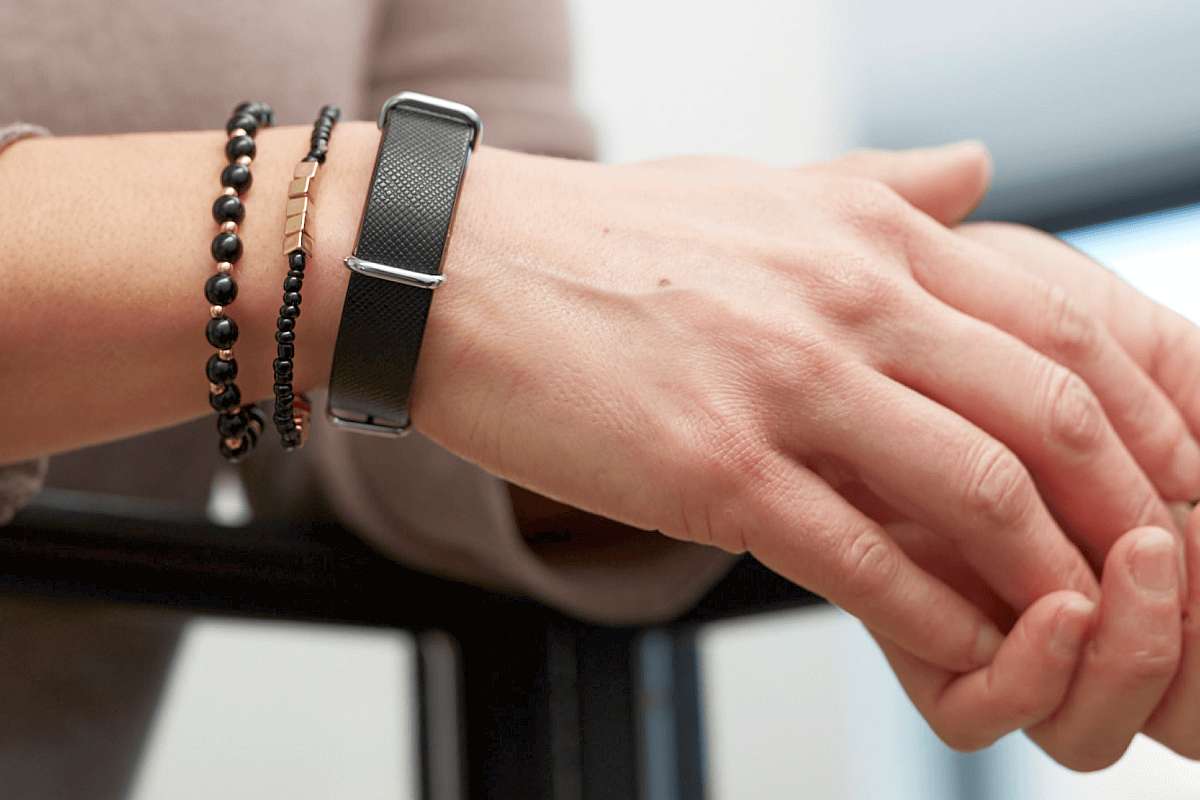
That five-year gap is exactly the space a continuous view of your own pattern can fill. The Hilo Band is built around tracking blood pressure over time rather than relying on a single reading, so you and your doctor can see how your numbers behave between NHS Health Checks, not just on the day you happen to book one.
Home monitoring only closes that gap usefully if the device behind it is trustworthy. The British and Irish Hypertension Society maintains the gold-standard list of validated blood pressure monitors, recommended by the NHS and NICE for home use, and that standard is the benchmark worth checking before buying any device. A home monitor, however it’s built, supports the conversation with your GP and any ambulatory monitoring they arrange; it doesn’t replace either one.
One thing to check before use: the Hilo Band isn’t intended for use during pregnancy, and people with certain implants or pre-existing conditions should check the product documentation or speak to their doctor first.
You can read more about the evidence behind Hilo’s approach on its science page.
The number that matters is the one your doctor sets for you
What counts as a normal blood pressure reading doesn’t change with age, but the target your doctor works towards after a diagnosis often does, particularly once you’re past 65 or 80. Guidelines will keep evolving, and different bodies will keep publishing slightly varying numbers, but none of that changes what matters day to day: the specific target your own doctor has set for you, based on your own health.
Keeping track of your pattern over time, rather than a single reading every few years, gives that conversation better evidence to work with. This is exactly what Hilo is built for.
Keep track of your pattern, not just one number
Hilo gives you a continuous view of your blood pressure between check-ups, so you and your doctor are working from more than a single reading every five years.
See How Hilo WorksThe information in this article is intended for educational purposes only and does not replace medical advice. If you suspect hypertension or are worried about your blood pressure, speak to your doctor. They can advise on the best way to effectively manage it.
FAQ
What is a normal blood pressure reading for adults aged 40 to 74?
The same diagnostic threshold applies across adulthood: a reading is usually considered high at 140/90 mmHg or higher in the clinic, or 135/85 mmHg or higher at home. Age within adulthood doesn’t shift this category; it stays the reference point whether you’re 45 or 74.
Do blood pressure targets change once you turn 65?
Yes, if you’ve already been diagnosed with high blood pressure. Under the 2023 ESH guideline, adults aged 65 to 79 without isolated systolic hypertension are treated towards below 140/80 mmHg. This is a treatment target set after diagnosis, distinct from the diagnostic threshold that applies to everyone.
Is 145/85 too high for someone in their 80s?
Under the 2023 ESH guideline, adults aged 80 and over are typically treated towards 140 to 150 mmHg systolic and below 80 mmHg diastolic, so 145/85 sits close to that range rather than clearly outside it. Individual targets vary, so this is a question worth raising directly with your doctor.
How often should adults aged 40 to 74 have their blood pressure checked between NHS Health Checks?
The NHS Health Check itself runs roughly every five years for this age group. Checking more often at home, ideally with a BIHS-validated monitor, can help you and your doctor spot changes long before your next scheduled check, without replacing it.
Sources
- C. Graham; J. Steckelmacher; J. Prashar et al. (2025). Trends in hypertension prevalence, control, and antihypertensive use in England from 2003 to 2021: insights from annual, nationwide Health Surveys for England. BMJ Medicine, 4(1), e001556. https://doi.org/10.1136/bmjmed-2025-001556
- P. Verdecchia et al. (2023). 2023 ESH Guidelines. What are the main recommendations? European Journal of Internal Medicine, 116, 1-7. https://www.ejinme.com/article/S0953-6205%252823%252900265-0/fulltext
- Blood pressure test. NHS. https://www.nhs.uk/tests-and-treatments/blood-pressure-test/ (Accessed September 2026)
- High blood pressure - causes and symptoms. British Heart Foundation. https://www.bhf.org.uk/informationsupport/risk-factors/high-blood-pressure (Accessed September 2026)
- 2023 ESH Hypertension Guideline Update. American College of Cardiology. https://www.acc.org/Latest-in-Cardiology/Articles/2024/02/05/11/43/2023-ESH-Hypertension-Guideline-Update (Accessed September 2026)
- People searching NHS advice on high blood pressure skyrocketed last year. NHS England. https://www.england.nhs.uk/2026/02/people-searching-nhs-advice-on-high-blood-pressure-skyrocketed-last-year/ (Accessed September 2026)
- New study warns of alarming decline in high blood pressure control in England. Queen Mary University of London. https://www.qmul.ac.uk/media/news/2025/medicine-and-dentistry/fmd/new-study-warns-of-alarming-decline-in-high-blood-pressure-control-in-england.html (Accessed September 2026)
- Find a professional BP monitor. British and Irish Hypertension Society (BIHS). https://bihs.org.uk/blood_pressure_technology/find_a_professional_bp_monitor.aspx (Accessed September 2026)
Read more

Exploring how the Hilo Band makes the invisible visible and motivates long-term lifestyle changes.

You take your reading first thing in the morning, see a number, and wonder: does that actually tell you anything? What happened overnight? A single reading only captures one moment, not a pattern....
Spot checks at the doctor's capture just a moment, not the pattern behind your numbers. This guide explains what a blood pressure monitor is, which devices the NHS and NICE point you towards, and h...