

Get the Measure of Motivation: The Hilo Effect on Your Blood Pressure

You open the Hilo app on a Tuesday morning and see a small dip in your blood pressure trend line. Nothing dramatic, but enough to notice. This short article explains why simply watching your numbers, an effect Hilo users have come to call the Hilo effect, can change what you do next, and what the evidence says about how far that change can go.
Which blood pressure monitor
is really right for you?
Answer 6 short questions and get your personalised top 3 recommendation.
Key Facts
- The UK has a blood pressure blind spot: an estimated five million adults in England may be living with undiagnosed high blood pressure, and a further five million have a diagnosis but no control over their numbers (Graham et al., 2025).
- Watching your numbers is linked to lower readings: in a real-world analysis of 838 users, persistent blood pressure monitoring was associated with a sustained 3.2 mmHg drop in systolic blood pressure after three months (Sola et al., 2022).
- Self-monitoring builds motivation, not just data: a review of 35 studies found that seeing your own readings strengthens motivation for lifestyle changes and consistency with medication (Natale et al., 2023).
- Hilo’s own users see even bigger results: across a real-world cohort of more than 30,000 users, Hilo’s own data shows an average systolic blood pressure reduction of 5.8 mmHg over six months, with results scaling with how consistently someone uses the device (Hilo, evidence data).
- Hilo turns that effect into a daily habit: the Hilo Band and app give you continuous feedback on your blood pressure trends, so the Hilo effect works in the background of everyday life.
The UK’s Blood Pressure Blind Spot
Blood pressure control in England has stalled, and in some ways gone backwards. A study published in BMJ Medicine, drawing on the Health Survey for England, found that undiagnosed hypertension fell steadily from 32.6% in 2003 to 23.7% in 2011, then climbed back to 32.4% by 2021, a reversal that puts diagnosis rates back where they stood two decades ago. The same analysis estimates that around five million adults in England may currently be living with high blood pressure they don’t know about, and a further five million know their diagnosis but don’t have it under control.
Only 38.3% of people with hypertension in England now have their blood pressure adequately controlled, well short of the 80% goal that earlier progress had been heading towards (Queen Mary University of London, 2025). Part of the problem is timing. A UK primary care study tracking almost 1,800 patients found that, on average, prehypertension is detectable a full 10.6 years before a formal diagnosis is made (Young, 2022). That’s a decade where small, visible signals could have prompted earlier action, but usually go unseen.
Why Simply Watching Your Numbers Changes Them
There’s a well-documented psychological principle at play, often called the Hawthorne effect: people tend to change their behaviour simply because they know they’re being observed, or in this case, observing themselves (Sola et al., 2022). Applied to blood pressure, checking your numbers regularly can become part of the routine that lowers them.
A review of 35 qualitative studies covering more than 870 patients found that self-monitoring bolsters motivation for lifestyle changes and encourages people to stick with their medication, largely because they can see the direct effect of their choices on their own readings (Natale et al., 2023). Picture someone who starts walking for twenty minutes after dinner and notices, a week later, that their evening readings have started trending down. That single visible link, between one small habit and one measurable outcome, is often enough to make the habit stick.
None of this replaces medical care. Watching your numbers is a way to understand what’s happening between appointments, and to bring better information to the ones you do have, not a way to decide for yourself when a doctor visit is or isn’t necessary.
What the Real-World Data Shows
Three separate data sources point the same way: watching your blood pressure regularly is linked to a measurable drop in your numbers. The table below lines them up so you can see how they compare.
| Data source | Sample | Result |
|---|---|---|
| AHA Hypertension Scientific Sessions, 2022 (Sola et al.) | 838 real-world users of a cuffless 24/7 monitor | Systolic blood pressure fell by 3.2 mmHg after three months, sustained through six months |
| Hilo evidence data (professional.hilo.com) | 30,000+ Hilo users | Average systolic reduction of 5.8 mmHg over six months, scaling with how consistently the device is used |
| Hypertension Research, 2023 (Almeida et al.) | 52 patients, single-centre preliminary study | No significant difference between a cuffless monitor and a 24-hour ambulatory monitor for daytime readings |
The study behind the first result points to two possible explanations for that 3.2 mmHg drop: the Hawthorne effect described above, or the possibility that seeing more frequent data prompted doctors to adjust treatment more actively. Either way, small reductions like this carry real weight, a 5 mmHg drop in systolic blood pressure is associated with roughly a 10% lower cardiovascular risk, regardless of how that drop is achieved (Aktiia, 2022).
Hilo’s 30,000-user figure is its own aggregate data rather than an independently published study, so it’s best read as directional real-world evidence sitting alongside the smaller, peer-reviewed AHA analysis, not as a substitute for it. The Almeida result, meanwhile, is an early, single-centre finding in a specific patient group rather than the general population, and other researchers have since raised questions about how far it generalises. What it does support is that the trend you’re watching is measuring something real, not just noise, not that a wearable can substitute for a clinically prescribed 24-hour test.
Medication Adherence: The Other Half of the Picture
Blood pressure control isn’t only about lifestyle. For readings that are significantly elevated, medication is often medically necessary, a decision for a doctor to make, not something lifestyle changes can substitute for on their own. The World Health Organization has estimated that around 50% of patients with a chronic illness in developed countries don’t take their medication exactly as prescribed (World Health Organization, 2003). Missing doses is rarely deliberate, it’s often a lack of feedback: without a visible sign that a medication is working, it’s easy to let doses slip.
Seeing your own trend line changes that. The same self-monitoring review found that patients who tracked their own readings felt a stronger sense of responsibility for their treatment and were more consistent about taking medication as prescribed (Natale et al., 2023). Lifestyle changes can work alongside medication, and over time, under a doctor’s guidance, may reduce how much medication someone needs. That decision always sits with a GP, not with an app.
Making the Hilo Effect Work for You
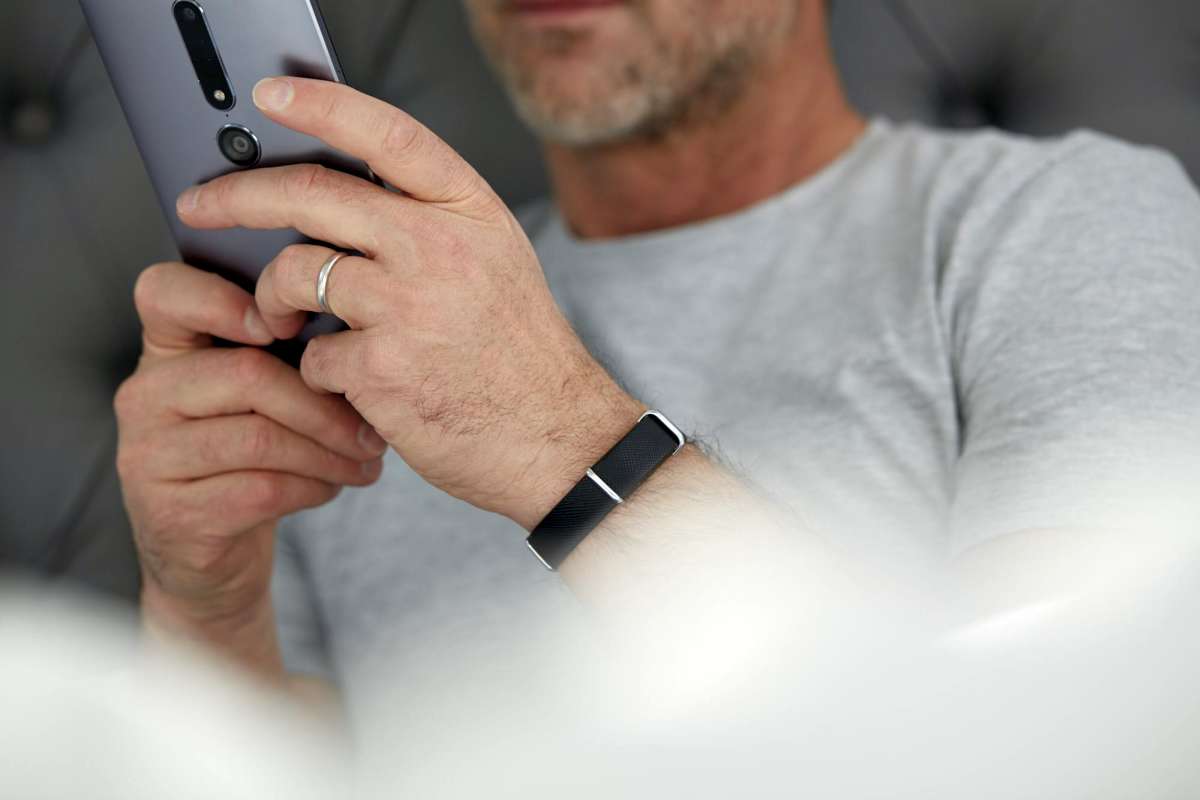
The Hilo Band and app are built around exactly this feedback loop. Instead of a single reading once a year at a check-up, the band takes multiple reference measurements a day, and the app turns them into a trend you can actually see, day to day and week to week.
A single blood pressure reading is still useful, it shows you a value in that moment, but it doesn’t show you the pattern behind it. What the Hilo Band adds is the pattern: how your numbers move with sleep, activity and stress, so the small changes that matter don’t get lost between appointments.
In practice, that means:
- Continuous readings, not one snapshot a year: the band takes an average of over 70 blood pressure measurements a week, day and night, instead of the single reading you’d get at a check-up.
- A monthly cuff calibration, not a daily one: after the initial set-up, the included cuff is only needed once a month to keep the band’s readings accurate.
- Trends you can actually read: the app turns raw numbers into weekly and monthly averages, so a single high reading doesn’t get mistaken for a pattern.
- Doctor-ready reports: your trends can be exported and shared directly with your GP, so your next appointment starts with data instead of guesswork.
- Passive activity tracking: a built-in step counter connects your daily movement to your blood pressure trend, without any extra effort.
This matters most in the UK context described above. With GP appointments often booked weeks out and the average person waiting years between an early warning sign and a formal diagnosis, having a day-to-day view of your own blood pressure is one of the few things you can act on immediately, without waiting for the next available slot. As with any blood pressure device, the Hilo Band isn’t suitable for everyone. People who are pregnant or have certain medical implants should check the full contraindications in the product documentation before use.
See Your Own Blood Pressure Patterns
The Hilo Band tracks your blood pressure continuously, turning single moments into a clear pattern you and your doctor can act on.
Get Hilo BandWatching your blood pressure builds a documented habit: the evidence linking self-monitoring to lower readings and better medication adherence is real, even if some of the specific figures are still being refined by ongoing research. The five million adults in England living with undiagnosed high blood pressure don’t need a diagnosis to start paying attention. With the Hilo Band, that attention becomes part of daily life, supporting the conversations you have with your doctor rather than replacing them.
This article is for educational purposes only and does not replace medical advice. If you suspect hypertension or are worried about your blood pressure, speak to your doctor. They can advise on the best way to effectively manage it.
FAQ
Sources
- C. Graham; J. Steckelmacher; J. Prashar et al. (2025). Trends in hypertension prevalence, control, and antihypertensive use in England from 2003 to 2021: insights from annual, nationwide Health Surveys for England. BMJ Medicine, 4(1), e001556.
https://doi.org/10.1136/bmjmed-2025-001556 - T. P. Almeida; M. Cortés; D. Perruchoud et al. (2023). Aktiia cuffless blood pressure monitor yields equivalent daytime blood pressure measurements compared to a 24-h ambulatory blood pressure monitor: Preliminary results from a prospective single-center study. Hypertension Research, 46, 1456–1461.
https://doi.org/10.1038/s41440-023-01258-2 - P. Natale; J. Y. Ni; D. Martinez-Martin et al. (2023). Perspectives and Experiences of Self-monitoring of Blood Pressure Among Patients With Hypertension: A Systematic Review of Qualitative Studies. American Journal of Hypertension, 36(7), 372–384.
https://doi.org/10.1093/ajh/hpad021 - J. Sola; D. Perruchoud; M. Cortes et al. (2022). Persistent Use Of Aktiia 24/7 Blood Pressure Monitor Is Associated With Lower Blood Pressure In Hypertensive Patients. Hypertension, 79(Suppl 1), AP304.
https://doi.org/10.1161/hyp.79.suppl_1.P304 - L. Young (2022). Undetected hypertension in primary care, a public health iceberg? European Journal of Public Health, 32(Suppl 3), ckac129.762.
https://doi.org/10.1093/eurpub/ckac129.762 - E. Sabaté (2003). Adherence to long-term therapies: evidence for action. World Health Organization, Geneva.
https://iris.who.int/handle/10665/42682
(Accessed August 2026) - Aktiia demonstrates at AHA Hypertension Scientific Sessions 2022 that the persistent use of a 24/7 cuffless monitor is associated with lower blood pressure in hypertensive subjects. PR Newswire.
https://www.prnewswire.com/news-releases/aktiia-demonstrates-at-aha-hypertension-scientific-sessions-2022-that-the-persistent-use-of-a-247-cuffless-monitor-is-associated-with-lower-blood-pressure-in-hypertensive-subjects-301621257.html
(Accessed August 2026) - New study warns of alarming decline in high blood pressure control in England. Queen Mary University of London / EurekAlert!.
https://www.eurekalert.org/news-releases/1107432
(Accessed August 2026)
Read more

Keep your mind sharp post-50. Discover the critical role your blood pressure plays in memory and thinking. Read now!

Discover how families can work together to prevent high blood pressure. Learn practical strategies for heart health across generations and the benefits of open communication about health.
Discover why your blood pressure might spike at night and how it can impact your diabetes. Learn now!