


A strong family unit and social network are pivotal for our health and wellbeing. Families set the standards in terms of what’s normal when it comes to diet and exercise, so it’s no coincidence that having a family history of high blood pressure makes you more prone to similar problems.
Attitudes to healthcare also have an impact, as a family that regularly visits the doctor increases the chances of one another catching health issues early. These behavioural patterns can have an influence for a lifetime, whether positive or negative, so it’s the responsibility of parents or senior members of the family to set a good example.
While it’s likely to be less impactful than lifestyle choice, genetics also have an effect on people’s susceptibility to heart problems.
Food and diet
Are fruit and vegetables provided with every meal? Are the majority of meals home-cooked? Is there a lot of unhealthy takeout? Diet is extremely important, as eating a lack of greens and/or being overweight or obese makes you more vulnerable to high blood pressure.
Families are recommended to follow the DASH diet, which includes: vegetables, fruit, grains (mainly whole grains), low fat or no-fat dairy foods, lean meats, poultry and fish, nuts, seeds and dry beans, as well as fats and oils.
You can also improve the quality of food, as one healthy eating tip is switching to fresh or frozen vegetables instead of canned or packaged vegetables with added sauces. Salt consumption should be limited, for example by picking low sodium vegetable soups and removing the shaker from the table. Meanwhile alcohol consumption should also be limited to two drinks per day.
Exercise
Exercising is just as important in terms of heart health, and as a family there are numerous ways to stay active.
Is there equipment in the home, like bikes, yoga mats and baseball gloves? Do parents lead by example when it comes to taking walks or playing sports? Are members of the family encouraging their children to explore different forms of exercise, to find what they like?
Physical activity can be a family activity, as you can go walking, cycling, or swimming for example. You can also sign up for community events, like a park run or charity walk. Having these family outings can help make physical activity part of a routine.
Genetics & Family History
Heart disease is more prevalent in some ethnicities, as in the US research shows that 47% of black adults have been diagnosed with cardiovascular disease, compared with 36% of white adults. Hispanic women are also more than twice as likely to have diabetes than white women, which is a prominent risk factor for heart disease.
The role genetics plays is debatable, but it’s certainly the case that if your family members are prone to certain health problems then so are you. If a close family member – like a parent, brother or sister – develops heart disease before the age of 55 or prior to menopause for females, then you have a greater risk of developing cardiovascular disease. This risk is even higher if multiple family members are affected.
The ‘silent killer’
If you have a family member with heart problems it’s recommended you get screened to potentially detect the early stages of cardiovascular disease. If it’s found your blood pressure is too high you can make lifestyle changes to improve the issue. For many people the biggest danger is not knowing, as an estimated half of those with hypertension are unaware they have the condition. Indeed, hypertension is often called the ‘silent killer’ due to the lack of noticeable symptoms that accompany the issue.
Regardless of your genetics or lifestyle, if you’re found to be in danger there’s nearly always action you can take. Indeed, an estimated 80% of heart disease is set to be preventable.
Marriage and relationships
Research shows that being married broadly lowers your risk of developing cardiovascular disease compared to single, divorced or widowed people. Being married can reduce stress, and provides a social support network.
However spouses can also negatively impact their partners’ health. Indeed, research shows that men whose spouses had hypertension had a two-fold increased risk of hypertension. This demonstrates how lifestyle habits are generally more important than genetics or inherited conditions in determining your vulnerability to heart disease.
On a related note, friends can influence your health. They can encourage exercise and help you avoid unhealthy habits, while they can also lower your stress and act as a support network in troubled times.
Parental guidance
Parents have a responsibility to set the tone when it comes to healthy eating and regular exercise, which helps children and teens maintain healthy blood pressure and weight levels.
If in doubt, stick to the DASH diet, which recommends foods like fruit, vegetables and lean proteins, while limiting salt and sugar. Establishing routine helps, so you should aim to keep meal times around the same time.
Exercise wise, being active for 60 minutes a day is a healthy target, and you can improve one another’s habits as a family unit.
You can also limit screen time on addictive devices like smartphones, computers and TV. Too much screen time can affect sleep, cause obesity and trigger attention problems. For children between the age of two to five, Mayo Clinic recommends limiting screen time to one hour a day.
It’s worth promoting good sleep habits, as sleeping poorly can increase blood pressure and raise the likelihood of developing hypertension.
Healthcare habits
When older family members go for regular check-ups and talk openly about health, younger family members are more likely to do the same.
These behaviours foster an awareness about any health issues or changes, and also improve awareness of genetic predispositions, or family history of illness, helping you to prevent future problems.
Family members are well placed to spot changes in each other before anyone else, signposting them to seeing their doctor faster.
Regular health checks, as well as annual physicals and dental check-ups, can be arranged as a family using a shared calendar, which can normalise important conversations.
Medical conditions and heart health
Heart health isn’t linear, as other health issues can influence high blood pressure.
For example having healthy teeth and gums is linked to the heart, as if you have gum disease research shows you have three times the risk of having a heart attack or stroke. Gum disease causes inflammation that can spread and ultimately affect the heart, although they often also occur together due to a third factor, such as smoking causing both conditions.
Regardless of the cause and effect it’s important to treat your health holistically, with heart health just being part of the overall package.
Stress and blood pressure
Having a stressful life can fuel high blood pressure. When you feel stress the body responds to a real or perceived threat, which results in a racing heart, tense muscles and sweating.
All of these cause your heart to work harder, raising blood pressure as well as increasing sugar and fat levels in the blood. They also increase the risk of clots forming and travelling to the heart or brain, which can trigger a heart attack or stroke.
While some feel stress day-to-day through a high-stakes job, events can cause temporary spikes. This can include a relationship breakdown or losing a loved one, moving home, leaving school or losing your job. Other stressful routine events include traffic jams, work pressures, or family responsibilities. They can also be ongoing events like not being able to afford food, not being able to find a job, and/or not being able to find an affordable home.
Stages of stress
Stage 1 of a stress event generally happens in response to a traumatic experience, like having a car accident. With Stage 1 events, typically known as a fight or flight response, your body releases stored sugars and fats which gives you temporarily high alertness.
In Stage 2 the body attempts to return to normality while staying on high alert.
At Stage 3 the body gets exhausted after using up more energy than it can produce. Once in this stage you are more susceptible to heart disease, stroke, high blood pressure, and mental illness.
Stress can lead to unhealthy behaviours which themselves worsen blood pressure issues, like drinking too much alcohol or smoking cigarettes.
Communication can ease stress
As a family it helps to create a calm and nurturing environment to alleviate stress. If the opposite is true, for example if there are regular arguments or feelings of isolation, that can make things worse.
At their best, families should ease stress by communicating about challenges, sharing responsibilities, encouraging others to be healthy, and engaging in family activities to relax and bond. To create a nurturing environment it helps to support each other and offer constructive help and suggestions, rather than focusing on criticism of one another’s mistakes.
Communicating with a health professional can also help you get things off your chest. As such, the Heart and Stroke Foundation of Canada recommends writing down what’s bothering you and prepping questions to ask before stepping foot through the door of your health professional. It may help to share information about challenges you are facing, including money problems, relationships or demands at work that are fuelling stress.
Stress-busting techniques
While every case is different, you can also apply mindful techniques to reduce your stress. Hypertension Canada recommends: “Learn to recognize the things you can and cannot control. Try learning relaxation techniques, exercising, setting realistic goals and talking with loved ones or a therapist during particularly difficult times.”
Meditation can be helpful in dealing with stress, while it can improve associated symptoms of high blood pressure. When you meditate it enables the body to relax, reducing the risk of developing hypertension. For those new to meditation it’s recommended to use meditation apps, or utilise guided meditation on websites like YouTube.
Heart health at different life stages
Children
Children need regular exercise, a balanced diet and ample sleep to keep their blood pressure in check. As an adult it’s healthy to limit their screen time to help them sleep, which is an important part of their development. Indeed, sleeping poorly can increase blood pressure and raise the likelihood of developing hypertension.
Hypertensive emergencies are rare in children, but if they have high or low blood pressure you need to help them alter their lifestyles to improve their health as they age.
Young adults
Being a young adult can be stressful, so they need support. Studying and taking exams can raise stress levels, while they are in a period of transition where their bodies are developing and they are deciding what to do with their lives.
It helps to provide them with a nurturing family environment to help them cope with growing pains. You should encourage them to exercise and eat a balanced diet, given the link between physical and mental health.
Young adults are likely to be exposed to temptations which can affect heart health, like alcohol and cigarettes, so good habits need to be established. Indeed, it’s thought the period between 17 and 25 years represents a key developmental period during which cardiovascular health behaviours are established or lost.
Middle aged adults
Once adults enter middle age (40-45 to 60-65) they become more vulnerable to hypertension, meaning there is more of a need to exercise than ever before. Indeed, as people age there is a higher incidence of hypertension. Just over half of (51%) of adults aged 60 to 79 had stage 2 hypertension compared to 22% of adults aged 40 to 59.
It’s no wonder then that it becomes more important to keep tabs on your blood pressure as you age. This means maintaining regular exercise, as well as keeping salt intake in check. Adults are encouraged to keep their daily sodium intake to less than 2000 mg. While this can have its challenges, it’s possible to adapt to eating less salt over time.
Older adults
When you get older, maintaining connections with friends and family is especially important, as there’s an increased risk of friends passing away, while reduced mobility also affects the ability to interact with one another. As always, you should acknowledge the link between mental and physical health.
It’s increasingly worth having medications as prescribed, as well as regularly monitoring blood pressure levels for any concerning changes.
You should also stay as physically active as possible. Exercises suitable for seniors generally need to be low impact, like walking, swimming and yoga.
Take control of your family’s heart health today. Get expert tips on healthy habits, stress management, and blood pressure monitoring—delivered straight to your inbox. Sign up for our newsletter now.
Pregnancy and blood pressure
Blood pressure levels during pregnancy are especially important, as high blood pressure can keep the baby from getting the necessary nutrients and oxygen it needs.
Generally blood pressure falls during early pregnancy, before returning to normal by the end.
However, having high blood pressure is a common complication, in which case your healthcare provider may provide medications to lower blood pressure, or ask you to more closely monitor blood pressure. Providers may take frequent blood pressure checks and blood and urine tests to monitor health.
Wearable health monitoring systems
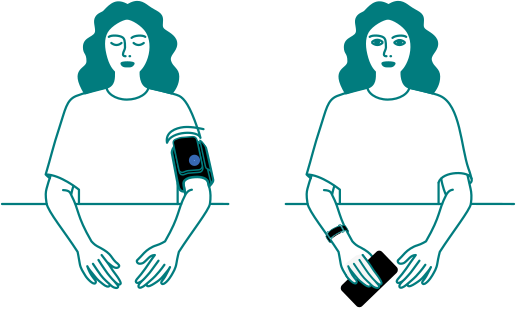
Monitoring blood pressure as a family couldn’t be easier with the help of the Hilo Cuff and App. These provide continual readings while you live your life, while you can stay informed about each other’s health.
The technology can help families continue to support each other in maintaining health and wellbeing, with this fresh communication aid.
Improving family health
By embracing the strategies mentioned you can work to improve or maintain the heart health of both you and your family.
It’s about establishing habits, so if you’re not used to applying these techniques, start small with family walks and more home-cooked meals.
Active blood pressure monitoring can give you and your family a sense of progress, enabling you to see improvements to blood pressure in real time, as you improve the lifestyle of yourself and those around you.
Disclaimer: This article is for informational purposes only and does not contain medical advice, and is not a replacement for medical advice. The information in this article is not intended to diagnose, treat, cure, or prevent any disease. Talk to a qualified medical professional before making any changes to your health regimen.
Sources
Hypertension Canada, Blood Pressure Action Plan, https://hypertension.ca/wp-content/uploads/2023/05/Your-Blood-Pressure-Action-Plan.pdf
MyHealth Alberta, Genetics, January 13, 2021, https://myhealth.alberta.ca/genetics#:~:text=Having%20a%20genetic%20condition%20can,that%20are%20often%20seen%20together.
MyHealth Alberta, High Blood Pressure in Children and Teens, July 31, 2024, https://myhealth.alberta.ca/Health/pages/conditions.aspx?hwid=abq2217
Statistics Canada, Risk factors for hypertension in Canada, February 20, 2019, https://www150.statcan.gc.ca/n1/pub/82-003-x/2019002/article/00001-eng.htm
Canadian Women’s Heart Health Centre, Family History: How does family history relate to cardiovascular disease? https://cwhhc.ottawaheart.ca/education/risk-factors/family-history
The Globe and Mail, Am I destined to inherit my mom’s high blood pressure?, July 3, 2012, https://www.theglobeandmail.com/life/health-and-fitness/ask-a-health-expert/am-i-destined-to-inherit-my-moms-high-blood-pressure/article4375214
CBC, Marriage tied to lower risk of fatal heart attack and stroke, Jun 19, 2018, https://www.cbc.Marriage tied to lower risk of fatal heart attack and stroke | CBC Newsca/news/health/marriage-heart-stroke-1.4712108
British Journal of General Practice, Are spouses of patients with hypertension at increased risk of having hypertension? A population-based case-control study., 1998, https://bjgp.org/content/48/434/1580
Heart and Stroke Foundation of Canada, Stress basics, https://www.heartandstroke.ca/healthy-living/reduce-stress/stress-basics
Heart and Stroke Foundation of Canada, Talking to your doctor, https://www.heartandstroke.ca/en/heart-disease/recovery-and-support/working-with-your-doctor/-/media/555848ccd7214e61b4646bbb8f8fdfa8.ashx
Pulse, How to Lower Blood Pressure Through Meditation, https://pulsemd.ca/2022/06/29/how-to-lower-blood-pressure-through-meditation/
Heart and Stroke Foundation of Canada, Loneliness, isolation and your heart health, https://www.heartandstroke.ca/articles/loneliness-isolation-and-your-heart-health
North York General, High Blood Pressure in Pregnancy, https://www.nygh.on.ca/areas-care/maternal-newborn-and-paediatric-care/pregnancy-and-birth/guide-to-pregnancy-and-birth/during-pregnancy/high-blood-pressure-in-pregnancy/
MyHealth Alberta, High Blood Pressure During Pregnancy, https://myhealth.alberta.ca/Health/pages/conditions.aspx?hwid=abo3926
World Health Organization, Hypertension, 16 March 2023, https://www.who.int/news-room/fact-sheets/detail/hypertension
Cleveland Clinic, How Race and Ethnicity Impact Heart Disease, 15 July 2022, https://my.clevelandclinic.org/health/articles/23051-ethnicity-and-heart-disease
Mayo Clinic, Friendships: Enrich your life and improve your health, 15 October, 2024, https://www.mayoclinic.org/healthy-lifestyle/adult-health/in-depth/friendships/art-20044860
Mayo Clinic,Screen time and children: How to guide your child, June 19, 2024, https://www.mayoclinic.org/healthy-lifestyle/childrens-health/in-depth/screen-time/art-20047952
Government of Canada, Prevention of heart diseases and conditions, 14 December, 2023, https://www.canada.ca/en/public-health/services/diseases/heart-health/heart-diseases-conditions/prevention-heart-diseases-conditions.html
Canadian Journal of Cardiology, Cardiovascular Risk and Cardiovascular Health Behaviours in the Transition From Childhood to Adulthood, September 2020, https://onlinecjc.ca/article/S0828-282X(20)30571-7/abstract