

What's the best time to take your blood pressure?

You’re probably aware that your blood pressure temporarily rises under certain circumstances, like right after a tough workout or a salty meal. If you’re monitoring your blood pressure at home, the short answer is that the best times to take a reading are in the morning, before food or medication, and in the evening, ideally at bedtime: two readings at each, one minute apart, for at least three days and preferably seven (My Blood Pressure Log). This guide covers when to take readings, what can affect them, and how to collect reliable data.
Which blood pressure monitor
is really right for you?
Answer 6 short questions and get your personalised top 3 recommendation.
Key facts
- Best times to measure: in the morning, before food or medication, and in the evening, ideally at bedtime.
- How many readings: two at each time, one minute apart, for at least three days – preferably seven.
- Before you measure: avoid eating, caffeine, smoking, and exercise for 30 minutes beforehand.
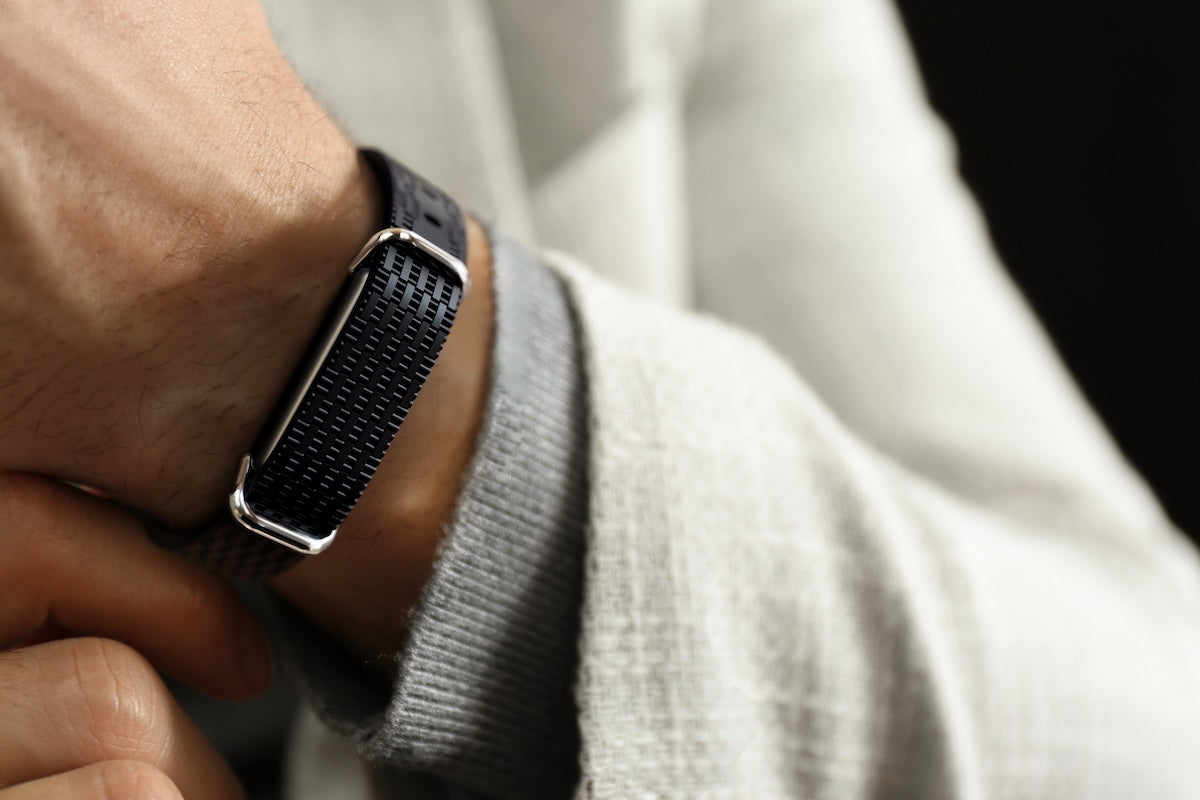
- Automatic readings: a wrist-worn monitor such as Hilo captures 30–35 readings per day automatically, building a fuller picture of your blood pressure pattern over time.
When should you take your blood pressure?
Blood pressure fluctuates throughout the day, so a single reading captures your blood pressure in one moment – it shows you a value, but not the pattern behind it. The best method to assess your overall blood pressure is therefore to take multiple readings at different times of the day and average them.
A practical starting point is two readings in the morning and two in the evening, for at least three days and preferably seven. Once you have these baseline readings, you can choose which time of day gives you the most accurate reading for your body.
Factors that can affect your readings
Blood pressure can be affected temporarily by the following factors (although there are others):
- A substantial snack or meal can lower blood pressure because your blood is directed to your digestive system – though a highly processed or salty meal may raise it.
- Caffeine can cause an increase in heart rate, which can increase your blood pressure.
- Smoking can raise your blood pressure.
- Exercise may reduce your average blood pressure over time, but it rises during a workout and for a period thereafter.
- Regular alcohol consumption can lead to hypertension.
- Some medications, such as decongestants and antidepressants, may raise your blood pressure, while blood pressure medications are designed to lower it. If you think a medicine is affecting your readings, speak to your doctor or pharmacist before making any changes, and never stop or adjust a prescribed medication on your own.
A good rule of thumb is to leave 30 minutes between any of these activities and taking a blood pressure reading.
What time of day is blood pressure highest
Typically, blood pressure rises before and after waking, tends to fall later in the day, and is usually lower during sleep (American Heart Association). Still, it’s highly individual: depending on your unique makeup and habits, blood pressure peaks at different points throughout the day. Taking multiple readings as the day goes on helps you recognise your own pattern and plan your readings accordingly.
High blood pressure at night
Some people experience high blood pressure at night, known as nocturnal hypertension. Common causes include:
- Sleep apnoea: pauses in breathing during sleep trigger a surge of stress that elevates your blood pressure.
- The rapid eye movement (REM) sleep phase: arousing or frightening dreams can increase heart rate and blood pressure.
- Nocturia: the need to get up to urinate during the night.
Even if it seems minor to you, elevated blood pressure at night is associated with cardiac events and organ damage if it’s severe enough. If you notice your blood pressure is higher at night, take a few readings during the day as well so you and your doctor can assess your pattern over time.
High blood pressure in the morning
High blood pressure in the morning is known as morning hypertension, defined as an elevation occurring between 6:00 am and 10:00 am. One potential cause is activation of the sympathetic nervous system – when your body shifts from automatic processes like breathing and heart beating to active ones like walking and eating. Another possible cause is inadequate use of blood pressure medications.
If your morning readings are unusually high, measure during the day as well so you and your doctor can establish a pattern and decide the best path forward.
How do you measure blood pressure?
The method most people are familiar with is a sphygmomanometer – an inflatable arm cuff for measurement of systolic and diastolic blood pressure.
General steps for taking a reading using a BP cuff
- Familiarise yourself with the device to ensure you follow the correct steps
- Empty your bladder first – a full bladder can make your blood pressure go up a little bit
- Sit quietly for five minutes beforehand, in a comfortable position with your legs and ankles uncrossed
- Rest your arm on a flat surface such as a table and allow the device to take a reading
- Take another reading one minute later and make a note of both results
Keep your blood pressure notes in one place over time so you can share them with your doctor – including low readings, as low blood pressure can also require medical management.
This manual process is effective but requires discipline to carry out on a daily basis. Wrist-worn monitors such as Hilo can take automated readings throughout the day, which is particularly useful for nighttime data: nighttime blood pressure has been associated with cardiovascular risk, though its added predictive value beyond average blood pressure remains uncertain.
What is a healthy blood pressure reading?
In the UK, a blood pressure reading is usually considered high if it’s 140/90mmHg or higher when checked by a healthcare professional, or 135/85mmHg or higher when checked at home (NHS).
For more information on blood pressure readings, read our guide on blood pressure monitoring.
The bottom line
The most important aspect of monitoring at home is routine: for most people, the best time to take a reading is first thing in the morning before breakfast and last thing at night before bed, avoiding food, caffeine, smoking, or exercise for 30 minutes beforehand. Readings have traditionally been taken with an inflatable arm cuff, but modern monitors such as Hilo’s continuous blood pressure monitor can passively and automatically take readings around the clock.
Build a fuller picture of your blood pressure
Hilo captures 30–35 readings per day automatically, so you and your medical team can see your blood pressure pattern over time.
Discover HiloFAQ
What if I work irregular hours?
Irregular shift patterns make regular readings difficult, but even a single daily reading will help monitor your health. Standard cuff measurements require you to plan when you take them; new blood pressure sensors worn on the wrist can capture 30–35 readings per day automatically, increasing the amount of data available to you and your medical team.
What is the best time to take blood pressure readings?
For many people, the best times to take a reading are in the morning before work, in the evening after work, and just before bed. Alert your doctor if you measure unusually high or low readings in the morning or late evening.
When is the best time to take blood pressure medication?
If you measure your blood pressure at multiple points throughout the day for several days, you will notice when it typically rises. You may choose to take your medication before your blood pressure rises, but as always, ask your doctor for guidance on when to take any prescription.
Disclaimer: This article is for informational purposes only and does not contain medical advice, and is not a replacement for medical advice. The information in this article is not intended to diagnose, treat, cure, or prevent any disease. Talk to a qualified medical professional before making any changes to your health regimen.
Sources
- P. Muntner; D. Shimbo; R. M. Carey et al. (2019). Measurement of Blood Pressure in Humans: A Scientific Statement From the American Heart Association. Hypertension, 73 (5), e35. https://doi.org/10.1161/HYP.0000000000000087
- K. Kario (2018). Nocturnal Hypertension: New Technology and Evidence. Hypertension, 71 (6), 997. https://doi.org/10.1161/HYPERTENSIONAHA.118.10971
- J. G. Wang; K. Kario; C.-H. Chen et al. (2018). Management of morning hypertension: a consensus statement of an Asian expert panel. J. Clin. Hypertens., 20 (1), 39. https://doi.org/10.1111/jch.13140
- D. Kim; J. W. Ha (2016). Hypertensive response to exercise: mechanisms and clinical implication. Clin. Hypertens., 22, 17. https://doi.org/10.1186/s40885-016-0052-y
- E. A. Lambert; K. Chatzivlastou; M. Schlaich et al. (2014). Morning surge in blood pressure is associated with reactivity of the sympathetic nervous system. Am. J. Hypertens., 27 (6), 783. https://doi.org/10.1093/ajh/hpt273
- Blood pressure test. NHS. https://www.nhs.uk/tests-and-treatments/blood-pressure-test/ (Accessed October 2026)
- Get the most out of home blood pressure monitoring. Mayo Clinic. https://www.mayoclinic.org/diseases-conditions/high-blood-pressure/in-depth/high-blood-pressure/art-20047889 (Accessed October 2026)
- My Blood Pressure Log. American Heart Association. https://professional.heart.org/-/media/Files/Health-Topics/High-Blood-Pressure/My-Blood-Pressure-Log.pdf (Accessed October 2026)
- How Does Exercise Affect Blood Pressure? Healthline. https://www.healthline.com/health/blood-pressure-after-exercise (Accessed October 2026)
- Salt and your blood pressure. Blood Pressure UK. https://www.bloodpressureuk.org/your-blood-pressure/how-to-lower-your-blood-pressure/healthy-eating/salt-and-your-blood-pressure/ (Accessed October 2026)
- Eating can cause low blood pressure. Harvard Health Publishing. https://www.health.harvard.edu/heart-health/eating-can-cause-low-blood-pressure (Accessed October 2026)
- Caffeine: How does it affect blood pressure? Mayo Clinic. https://www.mayoclinic.org/diseases-conditions/high-blood-pressure/expert-answers/blood-pressure/faq-20058543 (Accessed October 2026)
- Smoking and your blood pressure. Blood Pressure UK. https://www.bloodpressureuk.org/your-blood-pressure/how-to-lower-your-blood-pressure/healthy-living/smoking-and-your-blood-pressure/ (Accessed October 2026)
- Alcohol: Does it affect blood pressure? Mayo Clinic. https://www.mayoclinic.org/diseases-conditions/high-blood-pressure/expert-answers/blood-pressure/faq-20058254 (Accessed October 2026)
- Medications and supplements that can raise your blood pressure. Mayo Clinic. https://www.mayoclinic.org/diseases-conditions/high-blood-pressure/in-depth/blood-pressure/art-20045245 (Accessed October 2026)
Read more
Some medical conditions can affect your BP data if it’s being taken at the doctors. This article will look at some of those conditions, and consider ways of managing them.

Garlic has long been touted a treatment for lowering blood pressure in hypertensive individuals, but is there any truth in this claim? This short article will examine the evidence, and provide an a...

Learn how walking can help lower blood pressure, reduce hypertension risk, and support heart health. See how many steps to aim for and how Hilo can help.