

White coat hypertension: What is it, and how does it affect my BP measurements?
Hypertension (also known as high blood pressure) is a global issue, with around 1.4 billion adults affected worldwide, representing 33% of adults in the 30 – 79 age-range. But this isn’t an issue that only affects others. Hypertension rates in the UK broadly reflect those in other countries. In fact, in the UK:
- Around one in three adults suffers from it, which in England equates to 31% of men and 26% of women
- Hypertension is the third-biggest risk factor for all disease after smoking and poor diet
- Half of people with this condition are neither diagnosed nor receiving treatment – which in England is around 5 million adults
- Hypertension is responsible for more than half of all strokes and heart attacks, and is a risk factor for developing heart disease, kidney disease and vascular dementia.
While the statistics themselves are scary, there is reassurance in that often hypertension can be avoided through simple adjustments to diet and lifestyle. And it’s never too young to start! Research has shown that a high BP at age 55 or younger increases the risk of coronary heart disease independent of high blood pressure after 55 years of age.
However, while taking a blood pressure measurement is commonplace, especially if you visit the doctors regularly, our research has revealed that there are some gaps between what medical professionals say, and what the general public understands. In fact, we discovered that only 47% of the UK public had heard of ‘hypertension’ and understood it. The rest, representing over half of respondents, were unsure.
This short article will briefly discuss what hypertension is and the different types of hypertension that you may have heard of, with a specific focus on white coat syndrome.
What is hypertension?
Hypertension is a medical condition where your blood pressure is too high, and it can be extremely dangerous. While normal blood pressure measurements in the UK should be around 120/80 mmHg – we’ll talk about what those numbers mean in a second – in a hypertensive individual blood pressure is at, or over, 140/90 mmHg in a medical setting, or 135/85 mmHg when at home – and we’ll discuss that difference in a bit too.
The larger, or top, number is your systolic blood pressure, and is the pressure exerted on the walls of your arteries when your heart contracts to push blood around your body. The smaller, or bottom, number is your diastolic blood pressure, and is the residual pressure in your arteries in between beats. If, for any number of reasons, your heart has to work harder to push blood around the body, the pressure required is much higher, leading to hypertension. This potential for damage is important, ranging from atherosclerosis in your arteries (which can cause coronary heart disease), to narrowed, weakened, or even torn, smaller blood vessels, such as those in your kidneys, eyes and brain.
The reason that the NHS states two values for hypertension – a higher one in a medical setting and a lower one at home – is because some people find the act of a medical professional taking their blood pressure stressful, which raises it. This is known as white coat syndrome, and can result in white coat hypertension. However, these are two subtly different conditions, and warrant further discussion.
White coat syndrome vs white coat hypertension
- White coat syndrome is when your blood pressure is raised due to the stress of being in a clinic, and your blood pressure measurement is higher than it would be if you measured it at home.
- White coat hypertension is where your blood pressure readings are over 140/90 mmHg in the clinic – a measurement that is classified as hypertensive – but lower than 140/90mmHg at home.
While white coat syndrome and white coat hypertension are well-known medical conditions, affecting between 15 and 30% of the population, they are challenging to deal with. It’s likely that if a healthcare professional suspects you might have hypertension (or be borderline hypertensive), they may ask you to regularly take your blood pressure at home, or to use a 24-hour ambulatory blood pressure monitoring (ABPM) system to collect more data before making a diagnosis. Our short article, Choosing The Right Blood Pressure Monitor, gives further information about the types of monitor available and how to use them (although you should always follow manufacturer instructions).
However, there is another condition called ‘masked hypertension’, which is the exact opposite: measurements in the clinic give values that are lower than those at home. It’s been suggested that elderly, male, patients with large BP variability are most likely to suffer from this. In other patient populations, those with mental stress at home or work, smokers and those who consume more alcohol are more prone to a situational form of high BP that would be masked in a clinical setting, once away from the BP-raising situations. Those with sedentary lifestyles were also discovered to have masked hypertension once their BP was tested outside the doctor’s office. Finally, having nocturnal hypertension – which can result from metabolic syndrome, diabetes, chronic kidney disease, shortened sleep time, or obstructive sleep apnoea – may predispose individuals to masked hypertension.
Alongside white coat and masked hypertension, there are several other forms of hypertension, from labile, paroxysmal and orthostatic, to hypertension present in those with underlying health conditions.
It should be noted that labile, paroxysmal and orthostatic hypertension are harder to diagnose, and the Hilo Band may not pick up on these events if they are short-lived or occur while you are moving.
How do I know if I have these conditions?
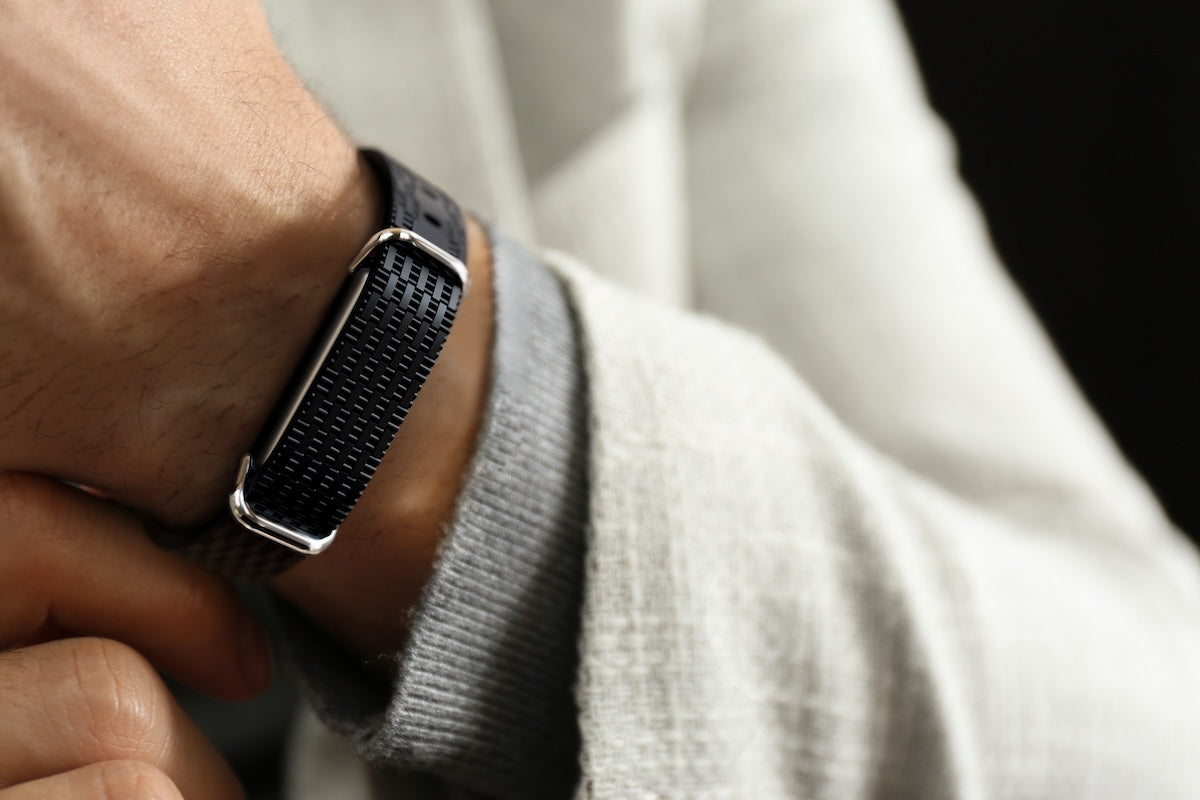
This is the tricky part: without having continual blood pressure data, you may not know. If a medical professional suspects you have hypertension, they may ask you to take your blood pressure regularly at home to collect more results. This will allow them to make a formal diagnosis, and then devise a treatment plan if necessary. There are several ways of keeping an eye on your BP at home, when it suits you, for example with an inflatable cuff or a wearable device, such as the Hilo Band.
While inflatable cuffs are common, and most people are familiar with them, they do require fore-thought. For example, you’re supposed to avoid smoking, caffeine or exercise for 30 minutes beforehand, and remain seated and relaxed for between 3 and 5 minutes directly before. On top of that, it’s recommended to take 3 measurements at a time, discarding the first one then averaging the other two. And finally, you need to write it down. To get the best information, it’s preferable to take measurements several times per day.
However, there are now wearable alternatives on the market, which can take blood pressure automatically and remove the requirement for pre-planning. And while there are several wearable devices available, only the Hilo Band is CE class IIa certified medical device, has its underlying technology approved by the FDA, and has validity data from four major clinical trials. Furthermore, readings are provided in mmHg – and presented as an easy-to-read graph in the Hilo App – instead of a simple ‘potential hypertension’ alert. This means you’ll have insights into what your BP does over the day – with up to 25 measurements in 24 hours – providing you with longitudinal data so you can see trends and patterns in your numbers. Furthermore, if you’re trying to work out if you have white coat or masked hypertension, you won’t even know when the measurement is being collected, so your blood pressure won’t rise or drop as a response.
Disclaimer: This article is for informational purposes only and does not contain, nor replace, medical advice. The information in this article is not intended to diagnose, treat, cure, or prevent any disease. Talk to a qualified medical professional before making any changes to your health regimen, medication included.
FAQs
Sources
High blood pressure. National Health Service (NHS), UK. https://www.nhs.uk/conditions/high-blood-pressure/ (Accessed May 2026)
Hypertension. World Health Organization. https://www.who.int/news-room/fact-sheets/detail/hypertension (Accessed May 2026)
Blood pressure facts and figures. Blood Pressure UK. https://www.bloodpressureuk.org/news/media-centre/blood-pressure-facts-and-figures/ (Accessed May 2026)
Blood pressure must be controlled in midlife before irreversible damage is done. British Heart Foundation. https://www.bhf.org.uk/what-we-do/news-from-the-bhf/news-archive/2020/september/blood-pressure-must-be-controlled-in-midlife-before-irreversible-damage-is-done (Accessed May 2026)
A Nation Under Pressure: Uncovering the UK’s Blood Pressure Divide. Hilo. https://hilo.com/en-gb/pages/bp-report-2025 (Accessed May 2026)
High blood pressure (hypertension). Mayo Clinic. https://www.mayoclinic.org/diseases-conditions/high-blood-pressure/symptoms-causes/syc-20373410 (Accessed May 2026)
Atherosclerosis. National Health Service (NHS), UK. https://www.nhs.uk/conditions/atherosclerosis/ (Accessed May 2026)
Coronary Heart Disease. National Health Service (NHS), UK. https://www.nhs.uk/conditions/coronary-heart-disease/ (Accessed May 2026)
Getting a blood pressure check. Blood Pressure UK. https://www.bloodpressureuk.org/your-blood-pressure/getting-diagnosed/getting-a-blood-pressure-check/ (Accessed May 2026)
Current status of white coat hypertension: where are we? (2020). G. Nuredini, A. Saunders, C. Rajkumar, M. Okorie, Ther. Adv. Cardiovasc. Dis., 14, 1–10. https://doi.org/10.1177/1753944720931637
White-Coat Hypertension: New Insights From Recent Studies (2013). S. S. Franklin, L. Thijs, T. W. Hansen, E. O’Brien, J. A. Staessen, Hypertension, 62, 982. https://doi.org/10.1161/HYPERTENSIONAHA.113.01275
24-Hour Ambulatory Blood Pressure Monitoring. Cleveland Clinic. https://my.clevelandclinic.org/health/diagnostics/16330-24-hour-ambulatory-blood-pressure-monitoring (Accessed May 2026)
Choosing The Right Blood Pressure Monitor. Hilo. https://hilo.com/it-eu/blogs/art/how-to-use-a-blood-pressure-monitor (Accessed May 2026)
Masked Hypertension: A Phenomenon of Measurement (2014). S. S. Franklin, E. O’Brien, L. Thijs, K. Asayama, J. A. Staessen, Hypertension, 65, 16. https://doi.org/10.1161/HYPERTENSIONAHA.114.04522
Blood Pressure Variability in Elderly Persons With White-Coat and Masked Hypertension Compared to Those With Normotension and Sustained Hypertension (2013). C. Cacciolati, C. Tzourio, O. Hanon, Am. J. Hypertens., 26, 367. https://doi.org/10.1093/ajh/hps054
Job Strain and Ambulatory Blood Pressure: A Meta-Analysis and Systematic Review (2013). P. A. Landsbergis, M. Dobson, G. Koutsouras, P. Schnall, Am. J. Public Health, 103, e61. https://doi.org/10.2105/AJPH.2012.301153
Association of environmental tobacco smoke exposure with elevated home blood pressure in Japanese women: the Ohasama study (2010). M. Seki, R. Inoue, T. Ohkubo et al., J. Hypertens., 28, 1814. https://doi.org/10.1097/HJH.0b013e32833a3911
Effects of Habitual Alcohol Intake on Ambulatory Blood Pressure, Heart Rate, and Its Variability Among Japanese Men (2008). T. Ohira, T. Tanigawa, M. Tabata et al., Hypertension, 53, 13. https://doi.org/10.1161/HYPERTENSIONAHA.108.114835
Masked hypertension is “unmasked” by low-intensity exercise blood pressure (2011). M. G. Schultz, J. L. Hare, T. H. Marwick, M.l Stowasser, J. E. Sharman, Blood Pressure, 20, 284. https://doi.org/10.3109/08037051.2011.566251
Sleep-Time Blood Pressure and the Prognostic Value of Isolated-Office and Masked Hypertension (2012). R. C. Hermida, D. E. Ayala, A. Mojón, J. R. Fernández, Am. J. Hypertens., 25, 297. https://doi.org/10.1038/ajh.2011.208
Does the time of day affect blood pressure? Hilo. https://hilo.com/en-gb/blogs/art/blood-pressure-time-of-day (Accessed May 2026)
How to measure your blood pressure at home. Blood Pressure UK. https://www.bloodpressureuk.org/your-blood-pressure/how-to-lower-your-blood-pressure/monitoring-your-blood-pressure-at-home/how-to-measure-your-blood-pressure-at-home/ (Accessed May 2026)
Your free 7-day blood pressure tracker. Hilo. https://hilo.com/en-gb/pages/download-blood-pressure-tracker
Hilo. Hilo. https://hilo.com/en-gb/products/blood-pressure-monitor (Accessed May 2026)
Read more

Apple cider vinegar is often linked to lower blood pressure, but does the science support it? Here’s what to know before adding it to your routine.

Garlic has long been touted a treatment for lowering blood pressure in hypertensive individuals, but is there any truth in this claim? This short article will examine the evidence, and provide an a...

Learn how walking can help lower blood pressure, reduce hypertension risk, and support heart health. See how many steps to aim for and how Hilo can help.

About the medical reviewer
Dr Sarah Skennerton
GP, United Kingdom