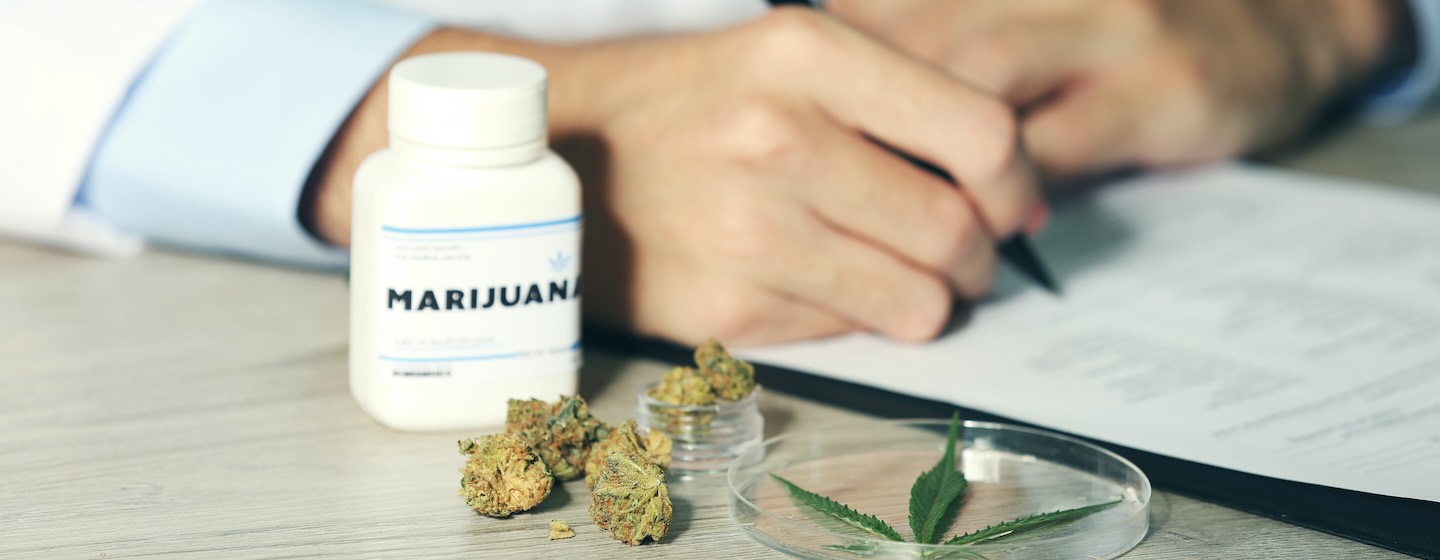
Can cannabis help with high blood pressure – or does it do more harm than good? While some studies point to possible positive effects, doctors warn of risks to the heart and circulatory system. This article sheds light on the subject and uncovers what the science really says.
Cannabis use worldwide is increasing
The use of cannabis is increasing across numerous regions in the world, with an estimated 244 million users in 2025, up from the estimated 178 million people aged 15 to 64 years who used cannabis at least once in 2012. While cannabis use has traditionally been thought of as being for recreational purposes (often illicitly), more and more countries are decriminalising it, and some, including the UK, are allowing consumption of cannabis, or products derived from cannabis, for medicinal purposes.
When it comes to the term ‘medical cannabis’, this usually means the use of cannabis or cannabinoids (chemicals derived from cannabis plants) as medical therapies, for example to treat disease or alleviate symptoms. These can be administered orally, sublingually (under the tongue), or topically; as well as being smoked, inhaled, mixed with food, or made into tea. In the UK, it’s unlikely that you will get a medical prescription for cannabis as it’s currently only prescribed for rare forms of epilepsies, vomiting or nausea caused by chemotherapy, and for some individuals with multiple sclerosis. Furthermore, the NHS website states that “while many cannabis-based products are available to buy online, their quality and content is not known. They may be illegal in the UK and potentially dangerous.”
Interestingly, in some countries where decriminalisation has occurred, such as Canada, older adults are the fastest growing group of new users. In this case, it’s often used for purposes perceived as being medical, for example pain management. But there is a flip-side: it was also observed that those users were unlikely to receive guidance from healthcare professionals, often relying on other non-clinical sources, and healthcare professionals and researchers alike have flagged the significant risk of knowledge gaps developing.
This article will take a brief overview of cannabis and its components, as well as its biological mode of action, medical applications, impact on the heart and cardiovascular system, and give an overview of some studies that have examined these effects.
Cannabis: three things that we know
- It’s been shown that cannabis contains two chemical substances that impact on the human body: Δ‐9‐tetrahydrocannabinol (also known as THC), and cannabidiol (CBD). These chemical entities are closely related in terms of chemical structure, but show different effects.
- THC: The primary psychoactive component of cannabis and responsible for the typical ‘high’. It interacts with both cannabinoid receptor 1 (CB1R) and cannabinoid receptor 2 (CB2R). CB1Rs are located in the brain, heart, liver, cardiovascular system, skin and muscles whereas CB2Rs are in the gastrointestinal tract and leukocytes/immune cells.
- CBD: Can interact with the body’s cannabinoid receptors, and can have antioxidant and anti-inflammatory effects as a result. However, the actions on the body are complex, and still being elucidated.
- When it comes to the impact of cannabis use on the cardiovascular system, there have been very few studies. These are often small-scale, short-term, or suffering from several limitations.
- There are several methods for taking cannabis such as smoking, vaporising, ingestion or topical application (directly onto the skin). Each of these different ways of administration will affect how much of the active ingredients you’re exposed to and, potentially, how they interact with your body.
Cannabis use and the biological effects
The biological effects of cannabis on the body can be wide-ranging between individuals, and may depend upon the route of administration. For example, if cannabis is inhaled into the lungs, the active compounds will enter your bloodstream rapidly, quickly reaching your brain and other organs, with effects likely felt within a few seconds to a few minutes. However, eating or drinking cannabis-containing products requires your body to digest the materials, leading to a slower-onset.
Cannabis as a medical intervention
A study that considered data from randomized clinical trials on cannabinoids for a range of medical conditions showed that there was moderate evidence to support their use for treatment of chronic pain and muscle spasticity. They also noted low-quality evidence that cannabinoids were associated with improvements in nausea and vomiting due to chemotherapy, weight gain in HIV, sleep disorders, and Tourette syndrome. However, there was a downside: the use of these cannabinoids was associated with an increased risk of short-term adverse effects (AEs) such as dizziness, confusion, diarrhoea and drowsiness.
Cannabis and your heart
The impact of cannabis on the body depends upon the THC content, with higher THC content leading to a more intense effect. When it comes to the adverse cardiovascular effect of cannabis, it’s the THC level that we need to consider.
A clinical trial published in the Journal of the American Heart Association in 2024 looked into the impact of THC on the cardiovascular system. They found that in THC-dominant cannabis, regardless of mode of inhalation (smoking or vaporising) participants experienced:
- An increase in heart rate, and
- An increase in BP
Both of these outcomes were suspected to increase arterial stiffness and reduce diastolic function of the heart (the heart’s ability to relax and fill the ventricles with blood between beats).
This also correlates with another US-based study, where the association between cannabis use and cardiovascular outcomes among the general population, never‐tobacco smokers, and younger individuals (aged 18 to 74 years old) were investigated. While this was not a trial and relied upon pre-collected data (leading to some study limitations), the use of cannabis was associated with increased risk of myocardial infarction (heart attack) and stroke, with a higher risk seen when the participant used cannabis more regularly, independently of whether they smoked regular tobacco cigarettes. In fact, another study that investigated the link between recreational substance use among adults showed its link to premature atherosclerotic cardiovascular diseases (ASCVD), regardless of which substance was taken.
Thus far, it seems that the connection between cannabis use and poorer heart health is clear-cut, but there is one study that should be mentioned, where the researchers showed that among older adults (average age 70.42) with hypertension, cannabis treatment for 3 months was associated with a reduction in systolic and diastolic blood pressure values, with the biggest drop 3 hours after cannabis administration. However, this study has some severe limitations, which should be taken into account: it was small-scale, there was no control group, some patients were already taking blood pressure medications, and most participants had pre-existing underlying health conditions that could impact upon their blood pressure, such as diabetes.
Want a steady stream of tips and insights on how to maintain a healthy blood pressure? Sign up to our newsletter!
CBD and your body
While thus far we’ve discussed cannabis as a whole, when it comes to its adverse impact on the cardiovascular system, and therefore your BP, it is mainly down to the THC component. You may have also heard of CBD-based products that are marketed as having a range of health benefits, including general well-being, relaxation, stress and pain relief. While this article is focussed on cannabis’ interaction with – and its impact on – your heart and blood pressure, it’s worth looking a little more closely at CBD.
Cannabidiol, or CBD, is a major component within cannabis that does not lead to the ‘high’ associated with THC, even though both compounds are similar structurally. However, it does have some physiological impacts, and has been shown to lead to anxiolytic effects – such as a reduction of anxiety, panic, and tension.
A study from Brazil showed that a single dose of CBD prior to subjecting a participant to something that scared them reduced anxiety, cognitive impairment and discomfort. However, the researchers stated that more clinical trials on larger cohorts were needed. When it comes to CBD and BP, another study from Brazil published in 2025 suggested that long-term use of CBD may be useful for BP control in hypertensive patients due to its vasorelaxant properties, but further investigation is required.
The take-home
While there is much hype around the use of cannabis as a medical treatment, with some evidence for its clinical effect in certain use-cases, such as treatment of chronic pain and muscle spasticity, its broader benefits are still being debated. For instance, US-based researchers are warning of an increased risk of heart attacks and strokes, especially in those with pre-existing cardiovascular disease.
Proven natural methods for lowering blood pressure instead of cannabis
While the use of cannabis to lower BP is unproven, there are other ways that you can look at to reduce your blood pressure and help your heart health naturally. Regular exercise, a balanced diet with less salt and more vegetables, targeted stress reduction, sufficient sleep, and abstaining from smoking and alcohol are strong foundations for your heart health journey.
This is where the Hilo Band comes in: with continuous, cuffless blood pressure monitoring round the clock, you can keep track of your readings – without disruptive measurements in your daily life. Hilo analyses the data, recognises patterns, and provides valuable insights that help you and your doctors make informed decisions. This makes the treatment of high blood pressure more precise and effective, and gives you the peace of mind that you’re doing the best for your health. In fact, we’ve upgraded the app, so the Hilo Band can now monitor your step count and sleep data, allowing you to quickly see the benefits of increasing your physical activity or achieving high-quality sleep.
FAQ
Is cannabis good for high blood pressure?
Cannabis is not a proven therapy for high blood pressure. US-based trials have shown that consumption of THC-dominant cannabis led to an increase in heart rate, and an increase in BP. These outcomes were suspected to increase arterial stiffness and reduce diastolic function of the heart. While CBD, another component of cannabis, may be useful for BP control with long-term use in hypertensive patients due to its vasorelaxant properties, further investigation is required.
What can I do to reduce my blood pressure?
In the short term, rest, deep breathing (box breathing), and stress reduction are helpful methods for reducing blood pressure. Longer term, regular exercise, a healthy diet, a reduction in salt (sodium) intake, and medication (if necessary) are most effective. Continuous blood pressure monitoring with the Hilo Band makes it possible to recognize your BP patterns and see the impact of any interventions quickly and easily.
Is cannabis good for the heart?
In short, no. Exposure to THC can increase your heart rate and raise your risk of heart attacks, especially in people with pre-existing heart conditions. Studies have shown that CBD has protective and vasodilating effects, but large-scale long-term studies are lacking. Caution is advised.
The information in this article is intended for educational purposes only and does not replace medical advice. If you suspect hypertension or are worried about your blood pressure, speak to your doctor. They can advise on the best way to effectively manage it. If you believe that you, or a loved one, needs any additional advice or support in relation to drug use or addiction, resources are available including Frank and the NHS.
Sources
World Drug Report 2025. United Nations Office on Drugs and Crime. https://www.unodc.org/unodc/frontpage/2025/June/wdr25.html (Accessed March 2026)
P. F. Whiting, R. F. Wolff, S. Deshpande et al. (2015). Cannabinoids for Medical Use: A Systematic Review and Meta-analysis. JAMA, 313, 2456. https://doi.org/10.1001/jama.2015.6358
Medical cannabis (and cannabis oils). National Health Service (NHS), UK. https://www.nhs.uk/medicines/medical-cannabis/ (Accessed March 2026)
J. Baumbusch, I. Sloan Yip (2020). Exploring New Use of Cannabis among Older Adults. Clin. Gerontol., 44, 25. https://doi.org/10.1080/07317115.2020.1746720
O. J. Ilonze, R. L. Page II (2024). Smoking or Vaping Cannabis and Cardiovascular Function: Is Δ‐9‐Tetrahydrocannabinol the Main Culprit? J. Am. Heart Assoc., 13, e038913. https://doi.org/10.1161/JAHA.124.038913
The Effects of Cannabis on Your Body. Healthline. https://www.healthline.com/health/effects-of-cannabis-on-body (Accessed March 2026)
NCT04693884 – Cannabis Inhalation: Effects on Cardiovascular Function During Rest and Exercise. Clinical Trials.gov. https://clinicaltrials.gov/study/NCT04693884
C. P. Cheung, A. M. Coates, R. E. Baker, J. F. Burr (2024). Acute Effects of Cannabis Inhalation on Arterial Stiffness, Vascular Endothelial Function, and Cardiac Function. J. Am. Heart Assoc., 13, e037731. https://doi.org/10.1161/JAHA.124.037731
Diastolic Dysfunction. Cleveland Clinic. https://my.clevelandclinic.org/health/diseases/23434-diastolic-dysfunction (Accessed March 2026)
A. M. Jeffers, S. Glantz, A. L. Byers, S. Keyhani (2024). Association of Cannabis Use With Cardiovascular Outcomes Among US Adults. J. Am. Heart Assoc., 13, e030178. https://doi.org/10.1161/JAHA.123.030178
Overview: Heart attack. National Health Service (NHS), UK. https://www.nhs.uk/conditions/heart-attack/ (Accessed March 2026)
D. Mahtta, D. Ramsey, C. Krittanawong et al. (2021). Recreational substance use among patients with premature atherosclerotic cardiovascular disease. Heart, 107, 650. https://doi.org/10.1136/heartjnl-2020-318119
Atherosclerosis. National Health Service (NHS), UK. https://www.nhs.uk/conditions/atherosclerosis/ (Accessed March 2026)
R. Abuhasira, Y. S. Havivb, M. Leiba et al. (2021). Cannabis is associated with blood pressure reduction in older adults – A 24-hours ambulatory blood pressure monitoring study, Eur. J. Intern. Med., 86, 79. https://doi.org/10.1016/j.ejim.2021.01.005
M. M Bergamaschi, R. H. Costa Queiroz, M. H. Nisihara Chagas, et al. (2011). Cannabidiol Reduces the Anxiety Induced by Simulated Public Speaking in Treatment-Naïve Social Phobia Patients. Neuropsychopharmacol., 36, 1219. https://doi.org/10.1038/npp.2011.6
B. Moreira Candeloro, N. Sousa Oliveira, A. C. Franchi, et al. (2025). Systematic Review and Meta-analysis to Investigate the Effects of Cannabidiol on Blood Pressure: Examination of Randomized Triple- and Double-Blind Placebo Trials. Rev. Bras. Farmacogn., 35, 878. https://doi.org/10.1007/s43450-025-00680-6
Lower blood pressure naturally with the DASH diet. Hilo. https://hilo.com/uk/art/dash-diet/ (Accessed March 2026)
Joining the Dots: Sleep, Blood Pressure, Health and Wellbeing. Hilo. https://hilo.com/uk/art/blood-pressure-at-night/ (Accessed March 2026)
Hilo. Hilo. https://hilo.com/uk/blood-pressure-monitor/
Data, Data Everywhere, But What Does It Actually Mean? Hilo. https://hilo.com/uk/art/apple-watch-hypertension-alert/ (Accessed March 2026)
3 breathing exercises to relieve stress. British Heart Foundation. https://www.bhf.org.uk/informationsupport/heart-matters-magazine/wellbeing/breathing-exercises (Accessed March 2026)