

A Shot in the Dark: The Importance of Nocturnal Hypertension Detection

Nocturnal hypertension (or having hypertension overnight) is widely under-diagnosed, but considered by many as an even more important indicator of your heart health than daytime measurements. This article will outline what it is and how it can be diagnosed.
There are several misconceptions around how to collect and interpret blood pressure data. One of the most common is that blood pressure is a static measurement, staying the same regardless of when the measurement is taken. This is a myth: blood pressure values vary throughout the day, in-line with your natural circadian rhythm.
In a healthy individual, BP will start to rise a few hours before waking, continuing upward until around midday, which is when it’s at its highest. It then tends to fall during the late afternoon into the evening, and overnight it should be at its lowest, around 10 to 20% below your daytime average. If this pattern is not seen, it may indicate an underlying problem, such as kidney disease, obstructive sleep apnoea, diabetes and Cushing’s disease to name but a few. Poor sleep may also be a contributing factor.
What is nocturnal hypertension?
Nocturnal hypertension is a medical condition where blood pressure is elevated overnight, with the European diagnostic thresholds for nocturnal hypertension being 120/70 mmHg. Nocturnal hypertension is increasingly being viewed as a key metric for health analysis and as an indicator for mortality risk. In fact, it’s so important that an article in the British Journal of General Practice made the recommendation that measurement of nighttime BP “should form part of the clinical assessment for hypertension in the UK, as is currently recommended in Europe, and that this is particularly important for those aged ≥60 years.”
Blood pressure should decrease as night, in-line with circadian rhythms. While daytime BP should be below 140/90 mmHg (above these values is broadly agreed to be indicative of hypertension), nocturnal values should be below 120/70 mmHg. However, international clinical guidelines vary, with some suggesting that anything above 110/65 mmHg classifies as nocturnal hypertension.
In some cases, people may have symptoms, such as:
- Sleep disturbances
- Waking often to urinate (nocturia)
- Difficulties breathing, including gasping and snoring
However, symptoms are not always seen, and you may be suffering from this condition without even realising.
How is nocturnal hypertension diagnosed?
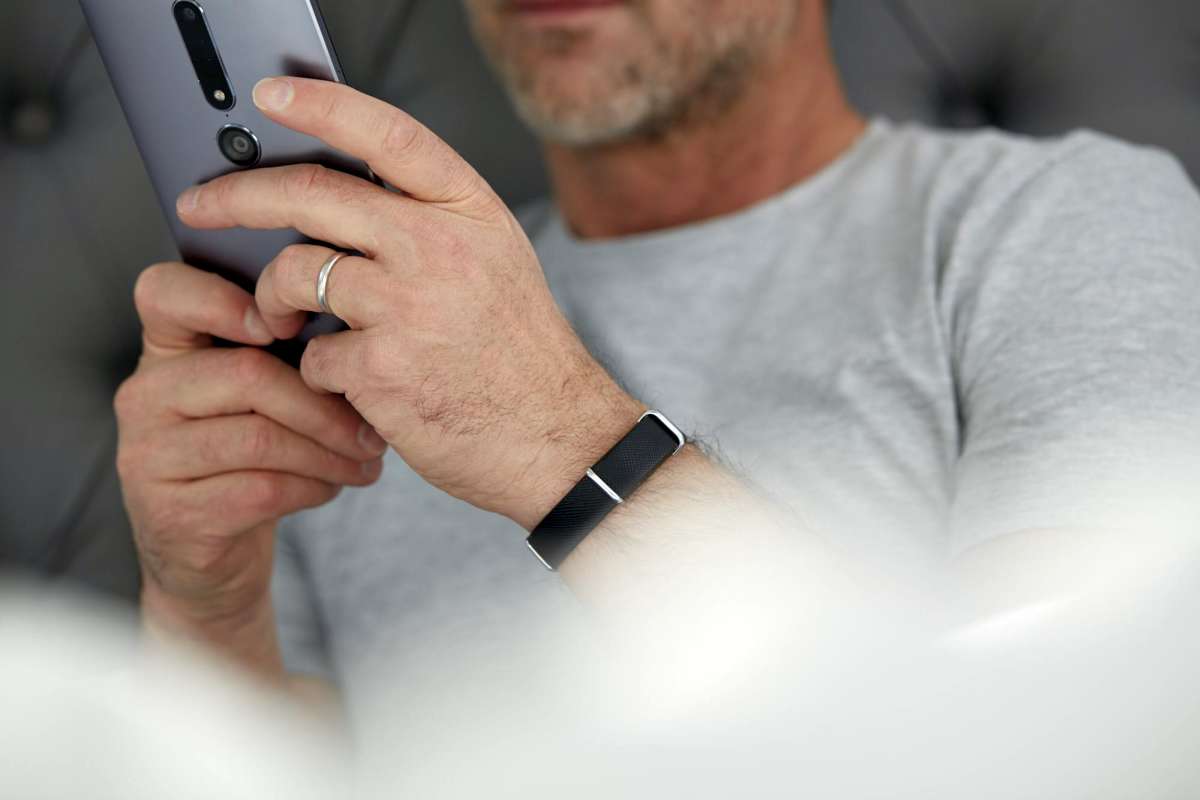
Getting a diagnosis can be very difficult, especially as this condition happens during sleep. If it is suspected, one of the tools used is ABPM (ambulatory blood pressure monitoring), but this may be uncomfortable for some people. ABPM relies on an upper-arm cuff placed on you for 24 hours, taking measurements by inflating every 30 minutes during the day and every hour at night. A potential flaw in this plan is that nighttime inflations can startle you or even wake you up, sometimes causing a spike in blood pressure. An alternative is to use a BP monitor that continuously takes measurements without needing a cuff, such as the Hilo Band, which uses photoplethysmography, or PPG rather than an inflatable cuff.
PPG uses visible light, and considers how much light is absorbed by blood vessels in the skin as the heart beats. With every beat, the blood volume in your vessels increases and more light is absorbed. Between beats, blood volume decreases and less light is absorbed. The Hilo Band, in combination with a proprietary algorithm, detects the changes in absorption and estimates blood flow, converting it into a blood pressure reading.
Who is at risk?
While, technically speaking, everyone is at risk of developing this condition, there are some risk factors. These include:
- Nocturia (peeing at night)
- Hypertension
- Obstructive sleep apnoea
- Sedentary lifestyle
- Lack of sleep
- Diabetes
- High salt intake
- Kidney disease
- Stress
Reduction of risk is readily achieved through following a healthy lifestyle, for example by eating a DASH diet, ensuring you do enough exercise (walking counts!), limiting alcohol consumption and avoiding smoking.
The take home
Nocturnal hypertension is a medical condition that can be very hard to diagnose, and therefore treat. It can put you at risk of severe health conditions, such as heart attack, stroke, and organ damage. It can also indicate that you have an underlying health condition, such as diabetes or kidney disease.
Wearing a Hilo Band can help reveal patterns and trends in blood pressure, alerting you to changes (or lack thereof) that may require further investigation by a medical professional. Treatment may include medication and/or lifestyle changes.
The information in this article is intended for educational purposes only and does not replace medical advice. If you suspect hypertension or are worried about your blood pressure, speak to your doctor. They can advise on the best way to effectively manage it.
FAQs
Sources
10 Surprising Myths & Facts About Blood Pressure Readings. Hilo. https://hilo.com/en-gb/blogs/art/10-surprising-myths-facts-about-blood-pressure-readings (Accessed April 2026)
Does the time of day affect blood pressure? Hilo. https://hilo.com/en-gb/blogs/art/blood-pressure-time-of-day (Accessed April 2026)
L. M. Prisant (2004). Blunted Nocturnal Decline in Blood Pressure. J. Clinical Hypertens., 6, 594. https://doi.org/10.1111/j.1524-6175.2004.03837.x
Joining the Dots: Sleep, Blood Pressure, Health and Wellbeing. Hilo. https://hilo.com/uk/art/blood-pressure-at-night/ (Accessed April 2026)
B. Williams, G. Mancia, W. Spiering et al. (2018). 2018 ESC/ESH Guidelines for the management of arterial hypertension: The Task Force for the management of arterial hypertension of the European Society of Cardiology and the European Society of Hypertension. J. Hypertens., 36, 1953. https://doi.org/10.1097/HJH.0000000000001940
L. C. Armitage, S. Davidson, A. Mahdi et al. (2023). Diagnosing hypertension in primary care: a retrospective cohort study to investigate the importance of night-time blood pressure assessment. Br. J. Gen. Pract., 73, e16. https://doi.org/10.3399/BJGP.2022.0160
B. Williams, G. Mancia, W. Spiering et al. (2018). 2018 ESC/ESH Guidelines for the management of arterial hypertension: The Task Force for the management of arterial hypertension of the European Society of Cardiology and the European Society of Hypertension. Eur. Heart J., 39, 3021. https://doi.org/10.1093/eurheartj/ehy339
M.-C. Cho (2019). Clinical Significance and Therapeutic Implication of Nocturnal Hypertension: Relationship between Nighttime Blood Pressure and Quality of Sleep. Korean Circ. J., 49, 818. https://doi.org/10.4070/kcj.2019.0245
What to know about nocturnal high blood pressure. Medical News Today. https://www.medicalnewstoday.com/articles/nocturnal-hypertension (Accessed April 2026)
Nocturia – getting up at night to pee. National Health Service (NHS), UK. https://www.guysandstthomas.nhs.uk/health-information/nocturia-getting-night-pee (Accessed April 2026)
Patient information factsheet: 24 hour blood pressure monitor. University Hospital Southampton NHS Foundation Trust. https://www.uhs.nhs.uk/Media/UHS-website-2019/Patientinformation/Heartandlungs/24-hour-blood-pressure-monitor-630-PIL.pdf (Accessed April 2026)
Hilo. Hilo. https://hilo.com/uk/ (Accessed April 2026)
M. Nagai, T. W. Dasari (2025). Nocturia and sleep blood pressure – A key link in a vicious cycle? Hypertens. Res., 48, 1652. https://doi.org/10.1038/s41440-025-02136-9
Lower blood pressure naturally with the DASH diet. Hilo. https://hilo.com/uk/art/dash-diet/ (Accessed April 2026)
Walk this Way: The Link Between Walking and Blood Pressure. Hilo. https://hilo.com/en-gb/blogs/art/walking-and-blood-pressure (Accessed April 2026)
Blood Pressure and Alcohol: What You Should Know. Hilo. https://hilo.com/uk/art/can-red-wine-really-help-to-lower-blood-pressure/ (Accessed April 2026)
Read more

Discover how families can work together to prevent high blood pressure. Learn practical strategies for heart health across generations and the benefits of open communication about health.
Discover why your blood pressure might spike at night and how it can impact your diabetes. Learn now!

The DASH diet: a flexible way to aid blood pressure management. Learn about the benefits, adhering to it and how to use Hilo's BP monitor to improve your cardiovascular health.

About the medical reviewer
Dr Sarah Skennerton
GP, United Kingdom