
Coffee and Blood Pressure: Debunking Myths, Exploring Benefits and Considering Side Effects

Coffee: A global phenomenon
Coffee is more than just another beverage. Around 1 billion of us drink it every day, leading to around 2.25 billion cups being consumed daily worldwide. In the UK, of those people that visit coffee shops, 80% do so at least once a week. Wherever you look, having coffee is a ritual followed by millions of people. But how does it impact our health and, more importantly, our blood pressure (BP)?
This article explores coffee’s effects on the body, busts some myths around the hype, and offers health tips for those with a caffeine habit.
Debunking coffee myths
Time for a coffee break… likely due to its global popularity, several myths pervade around the negative effects of coffee consumption:
Myth 1: Coffee is dehydrating
Truth: Yes, the caffeine found in coffee has a diuretic effect and therefore can increase urine production. However, a study that compared the effects of caffeinated, non-caffeinated, caloric and non-caloric beverages on hydration showed no significant differences in hydration levels between healthy males, and an increasing body of research is showing that the fluid present in caffeinated drinks actually balances the increase in urine production that they can cause.
Myth 2: Coffee always raises blood pressure
Truth: There is no clear-cut answer, as the relationship between coffee and blood pressure is complex. Caffeine can cause a temporary spike in blood pressure, but any increase is short-lived. For most people without blood pressure issues, moderate coffee consumption is unlikely to be a concern.
Myth 3: Coffee stunts growth
Truth: While children under 12 shouldn’t drink caffeine at all, scientific studies haven’t found a link between coffee consumption and stunted growth in adults or older adolescents.
Types of coffee and their effects
Not all coffee is created equal. The brewing method, type of coffee, amount of water added, and even where you buy your beverage can significantly impact its taste, caffeine content and health effects. If you’re concerned about how caffeine might raise your blood pressure – even if only for a short time – it’s worth understanding these differences so that you can make informed choices.
The brewing method
- Espresso: Highly concentrated, with about 63 mg of caffeine per ounce in a single espresso shot.*
- Drip (brewed) coffee: Contains between 12 and 16 mg of caffeine per ounce, so around 112 mg caffeine in total (for an 8 oz drink).*
- Instant: Usually has slightly less caffeine than a brewed coffee, at around 8 mg per ounce, so 64 mg caffeine in total (for an 8 oz drink).*
- Cold brew: Can be higher in caffeine content due to its longer steeping time. On average, it contains around 12 mg per ounce, so about 96 mg caffeine (for an 8 oz drink).*
*Please note these caffeine concentrations are for guidance only, and there can be significant variation between countries and vendors in that country.
The variety of coffee bean
Alongside the way that the coffee is prepared, the actual variety of coffee bean used can also have an impact. There are two main species of coffee bean, which are derived from either Coffea arabica or Coffea canephora, corresponding to arabica beans or robusta beans, respectively. Most cultivars of arabica coffee contain around 1.0% caffeine by weight, whereas robusta coffee beans tend to contain more, at around 1.7% by weight. This means that if you brew a coffee that is marked as ‘robusta’, it will likely contain more caffeine than that marked ‘arabica’.
The vendor
Finally, a survey by Which? and reported by the BBC found that where a coffee is purchased can have a big impact on caffeine content. For example, in the UK, Costa offers the strongest medium cappuccino, with 325 mg of caffeine in the drink, 5 times more than found in the same drink at Starbucks. For context, a 250 mL can of Red Bull contains 80 mg. Or, if you’re after a caffeine shot, a single espresso from Pret a Manger was six times stronger than one from Starbucks at the time of the report.
While you may not worry about how much caffeine you’re drinking, and in most cases you don’t need to, for some people – such as those who are pregnant or sensitive to caffeine – may want to keep an eye on their intake.
Coffee and overall health: Finding the right dosage
Independent of the specific bean, roast or brewing method, cup size matters. Whether coffee has a positive or negative effect on health depends on how much coffee you actually drink. Because yes, excessive quantities of caffeine can lead to anxiety, restlessness, nervousness, irritability and even insomnia. And yes, coffee does stain your teeth.
Not only does the type of coffee affect how it impacts the body, the same is true for the person under its influence. Unsurprisingly, there’s wide variation in how sensitively people react to caffeine and how fast they can metabolise it. So, what’s the magic number? Well, the guidelines depend upon where you live with around 300 mg per day being the average guideline. Research has linked caffeine intakes of over 600 mg per day with side effects including insomnia, nervousness, irritability, increased blood pressure and upset stomachs, although this is very person-dependent. If you’re pregnant in the UK, the NHS suggests that you shouldn’t consume more than 200 mg, or 2 cups, of caffeinated coffee a day, since high caffeine intake has been linked with low birth weight (Note: that’s caffeine and not just coffee – so make sure you consider all beverages).
While there are some negatives to coffee consumption, it has been shown that drinking a moderate amount of coffee daily can have a positive effect on your physical and mental health, and even mortality. However, you might want to stay away from drinks that mix coffee and alcohol: the presence of caffeine in an alcoholic drink was shown to reduce feelings of intoxication and led to an increased desire to keep drinking.
Coffee and blood pressure: Finding the right balance
While caffeine in coffee can cause a temporary rise in blood pressure, it’s unclear whether drinking coffee regularly is related to hypertension risk. Analysis of a range of studies on coffee consumption suggested a U-shaped relationship, where higher consumption (4 or more cups of coffee per day) protected against hypertension in women, and that the risk of hypertension was also lower in those who abstain from coffee. A more recent study stated quite clearly that “coffee consumption was not associated with cardiovascular diseases or altered cardiac structure or function suggesting possibly counterbalancing, neutral effects of coffee on cardiovascular health.” However, if you have hypertension you still may wish to take it easy. The NHS explicitly states that you shouldn’t drink too much, possibly because of the short-term BP elevation seen directly after consumption which could be dangerous in those with pre-elevated BP.
Hypertension: the silent killer
However, while it’s easy to say that you should avoid caffeine if you have hypertension, you may have this serious condition and not realise it. In the UK, one in three adults has high blood pressure, but half of them are unaware – and they’re neither diagnosed nor receiving treatment. This is where the Hilo Band comes in. Thanks to its collection of ~25 measurements around the clock, the Hilo Band can readily identify your blood pressure’s patterns and trends – even while you sleep.
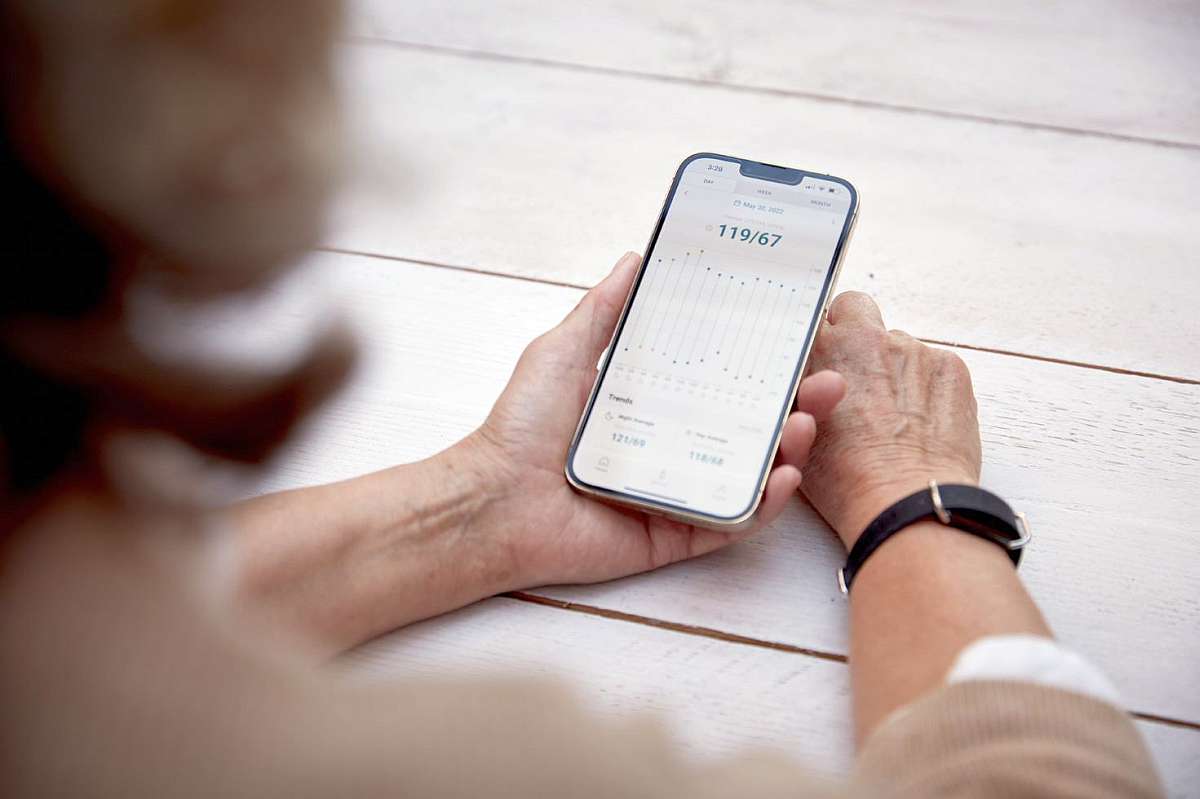
After initial set-up, where an inflatable cuff (provided) is used to take your baseline BP measurement over 4 days (meaning even better accuracy), the wrist-worn band automatically measures your BP when it senses that you’ve been still for long enough. Even while you sleep. Data are then presented in an easy-to-read graph of your BP trends, allowing you to see how BP changes throughout the day (spoiler: it’s not the same all the time). And that’s not all, the Hilo Band can now do step count and monitors your sleep, meaning that you can directly see how exercise and sleep quality impact your numbers.
Stay informed about the latest news and resources for blood pressure control. Subscribe to our newsletter now!
Coffee as part of a healthy lifestyle
One (often overlooked) problem linked to coffee drinking is not coffee itself, but what is added to it. You might love a complicated drink order with syrups and cream galore (and who can blame you), but in excess these could cause unwanted problems. Add-ins like milk or sugar/syrups are often low in nutritional value, but packed with energy and fat. These excess calories can lead to an increase in weight and its related issues, and they are often forgotten about in a day’s total energy intake.
Moreover, if you are a coffee drinker who keeps it simple, but doesn’t monitor your caffeine intake, your friendly cup of joe could turn against you. Side effects of excessive caffeine consumption may appear, which can include:
- headaches
- upset stomach
- sweating
- feeling jittery
- diarrhoea
Fortunately, there are plenty of uncaffeinated alternatives to coffee out there. So, if you’re looking to reduce caffeine intake while still enjoying a hot drink on your “coffee” break, there are several other options to consider:
Decaf coffee
Decaffeinated coffee offers a similar taste and many of the same antioxidants as regular coffee, with only about 2% of the caffeine. A study from the American Diabetes Association found that decaf coffee was, just like regular coffee, associated with a reduced risk of type 2 diabetes.
Herbal teas
Many herbal teas offer health benefits without caffeine:
- Chamomile tea may improve sleep quality and reduce anxiety.
- Peppermint tea can aid digestion and relieve tension headaches.
- Hibiscus tea may help lower blood pressure.
Chicory root coffee
Roasted chicory root has a flavour similar to coffee but contains no caffeine. It’s rich in inulin, a prebiotic fibre that can support gut health.
Golden milk
This traditional Indian drink made with turmeric, ginger, and warm milk (or a plant-based alternative) offers anti-inflammatory benefits and can be a soothing evening drink.
Rooibos tea
This South African tea is caffeine-free and rich in antioxidants. Some studies suggest it may have benefits for heart health and blood pressure.
When choosing alternatives, it’s important to still be aware of added sugars or artificial sweeteners that might impact overall health. Just like with coffee, moderation is key, and it’s always best to consult your healthcare provider about the best choices for your individual health needs.
What about caffeine powder?
Caffeine powder is finding notoriety as a food supplement, and when added to products, claims relating to physiological effects, such as increased focus or performance enhancement, are often included. However, it’s important to note that caffeine powder, or food supplements, may contain high levels of caffeine that can be derived from a number of different sources.
As stated throughout this piece, the dose of caffeine ingested is important, and some individuals may have a different response to others. High exposure to caffeine can cause anxiety, restlessness, agitation and sleeplessness. Moreover, excessive caffeine consumption (in the region of 1.2 grams per day) can cause serious adverse effects such as rapid heart rate, abnormal heart rhythms and seizures, with intake over 10 – 14 g being reported as fatal in some cases, although those sensitive to caffeine or with heart conditions might see ill effects at lower doses. While these outcomes are possible through excessive consumption of coffee or tea, when consuming 100% pure caffeine powder additional care should be taken and the doses stated on the label stringently followed. In addition, overall consumption should consider caffeine from all sources (e.g. tea, coffee, soft drinks), not just the powder itself.
The coffee break takeaway
Coffee holds a special place in our daily routines, plus it offers potential health benefits. Understanding its impact on blood pressure is crucial if you’re concerned about your heart health or your sensitivity to coffee’s active ingredient – caffeine.
With tools like the Hilo Band, you can gain insights into how your body responds to dietary choices, including coffee. This helps you to take proactive steps to maintain heart health. So, the next time you pour yourself a cup of joe, take comfort in knowing that this pick-me-up drink might also be good for your health.
Disclaimer: The information in this article is for educational purposes only and does not contain, nor replace, medical advice. If you have any health concerns, please consult with your physician or qualified healthcare provider. Any changes to your diet or lifestyle should be made under medical supervision. The author and publisher are not responsible for any adverse effects resulting from the use or application of the information presented in this article.
FAQ
Is coffee linked with high blood pressure?
Caffeine (found in coffee) can cause a temporary spike in blood pressure, but any increase is short-lived. For most people without blood pressure issues, moderate coffee consumption is unlikely to be a concern. If you have hypertension, the NHS advice is to be careful about your caffeine intake.
Does coffee make me dehydrated?
Yes, the caffeine found in coffee has a diuretic effect, and therefore can increase urine production. However, studies have shown no differences in hydration between those who drink coffee and those who don’t, as the fluid present in coffee actually balances with the increased urine production.
Can I have coffee as part of a healthy lifestyle?
Yes! But, just take care around the quantity that you drink. This issue isn’t the coffee itself, it’s the caffeine content. Too much caffeine can be dangerous, so make sure you consider consumption of all caffeinated drinks as a whole. And, go easy on the additives. Syrups and cream taste delicious, but are often packed with calories.
Sources
Gunter, M. J et al., (2017). Coffee Drinking and Mortality in 10 European Countries: A Multinational Cohort Study. Annals of Internal Med., 167 (4), 236. https://doi.org/10.7326/M16-2945
Coffee Consumption, British Coffee Association. https://britishcoffeeassociation.org/coffee-consumption (accessed February 2026)
Grandjean, A. C.; Reimers, K. J.; Bannick, K. E.; Haven, M. C. (2000). The Effect of Caffeinated, Non-Caffeinated, Caloric and Non-Caloric Beverages on Hydration. J. Am. Coll. Nutr., 19 (5), 591. https://doi.org/10.1080/07315724.2000.10718956
Do caffeinated drinks, such as coffee or energy drinks, hydrate you as well as water? Mayo Clinic. https://www.mayoclinic.org/healthy-lifestyle/nutrition-and-healthy-eating/expert-answers/caffeinated-drinks/faq-20057965 (Accessed February 2026)
Caffeine: How does it affect blood pressure?, Mayo Clinic. https://www.mayoclinic.org/diseases-conditions-high-blood-pressure-expert-answers-faq-20058543 (Accessed February 2026)
Can Coffee Really Stunt Your Growth? Harvard Health Publishing. https://www.health.harvard.edu-staying-healthy-can-coffee-really-stunt-your-growth (Accessed February 2026)
A little or a latte? – Which? finds huge differences in high-street coffee caffeine levels. Which? https://www.which.co.uk/policy-and-insight/article/a-little-or-a-latte-which-finds-huge-differences-in-high-street-coffee-caffeine-levels-athmJ0F9z1yS (Accessed February 2026)
Caffeine content for coffee, tea, soda and more. Mayo Clinic. https://www.mayoclinic.org/healthy-lifestyle/nutrition-and-healthy-eating/in-depth/caffeine/art-20049372 (Accessed February 2026)
H. Ashiharal A. Crozier (2001). Caffeine: a well known but little mentioned compound in plant science, Trends in Plant Science, 6 (9), 407–413. https://doi.org/10.1016/S1360-1385(01)02055-6
Costa cappuccino has five times more caffeine than Starbucks. BBC News, 1 February 2023. https://www.bbc.co.uk/news/business-64472214
How caffeine affects your body. Bupa. https://www.bupa.co.uk/newsroom/ourviews/how-caffeine-affects-body
Top 10 teeth-staining foods. Bupa. https://www.bupa.co.uk/newsroom/ourviews/teeth-staining-foods
Coffee and Health; it’s not just about the caffeine… The Association of UK Dietitians. https://www.bda.uk.com/resource/coffee-and-health-it-s-not-just-about-the-caffeine
Water, Drinks and Hydration. National Health Service (NHS), UK. https://www.nhs.uk/live-well/eat-well/food-guidelines-and-food-labels/water-drinks-nutrition
Heinz, A. J.; de Wit, H.; Lilje, T. C.; Kassel, J. D. (2013). The combined effects of alcohol, caffeine, and expectancies on subjective experience, impulsivity, and risk-taking. Exper. Clin. Psychopharmacol., 21(3), 222. https://doi.org/10.1037/a0032337
Geleijnse, J. M. (2008). Habitual coffee consumption and blood pressure: An epidemiological perspective, 4 (5), 963. https://doi.org/10.2147/VHRM.S3055
Senftinger, J.; Nikorowitsch, J.; Borof, K.; Ojeda, F. et al. (2023). Coffee consumption and associations with blood pressure, LDL-cholesterol and echocardiographic measures in the general population. Sci. Rep., 13, 4668. https://doi.org/10.1038/s41598-023-31857-5
High Blood Pressure. National Health Service (NHS), UK. https://www.nhs.uk/conditions/high-blood-pressure/
Blood Pressure Facts and Figures. Blood Pressure UK. https://www.bloodpressureuk.org/news/media-centre/blood-pressure-facts-and-figures
Hilo Band. Hilo. https://hilo.com/uk/blood-pressure-monitor
Joining the Dots: Sleep, Blood Pressure, Health and Wellbeing. Hilo. https://hilo.com/uk/art/blood-pressure-at-night
An, R.; Shi, Y. (2017). Consumption of coffee and tea with add-ins in relation to daily energy, sugar, and fat intake in US adults, 2001–2012. Public Health, 146, 1. https://doi.org/10.1016/j.puhe.2016.12.032
Ding, M.; Bhupathiraju, S. N.; Chen, M.; van Dam, R. M.; Hu, F. B. (2014). Caffeinated and Decaffeinated Coffee Consumption and Risk of Type 2 Diabetes: A Systematic Review and a Dose-Response Meta-analysis. Diabetes Care, 37 (2), 569. https://doi.org/10.2337/dc13-1203
Nishimura, M.; Ohkawara, T.; Kanayama, T.; Kitagawa, K. et al. (2015). Effects of the extract from roasted chicory (Cichorium intybus L.) root containing inulin-type fructans on blood glucose, lipid metabolism, and fecal properties. J. Tradit. Complement. Med., 5 (3), 161. https://doi.org/10.1016/j.jtcme.2014.11.016
Food supplements containing caffeine. Food Standards Agency, UK. https://www.food.gov.uk/safety-hygiene/food-supplements-containing-caffeine
Read more

Since 2004, Aktiia has been a pioneer in continuous blood pressure monitoring. Today, we’re incredibly excited to announce the next step in our journey: Aktiia is becoming Hilo! Our transition ...
Regular blood pressure readings are a great way to monitor health over time, and should be taken at the same time each day. Factors that can affect blood pressure include eating, taking in caffeine...

Hilo Band is helping to reshape approaches to blood pressure monitoring. Its accuracy has been rigorously tested to meet international standards.

About the medical reviewer
Dr Sarah Skennerton
GP, United Kingdom

About the author
Piotr Kudela
Website Editor, Growth Marketing by Aktiia