
Hypertension is often called the ‘silent killer’, and having hypertension can significantly increase the risk of cardiac events or even death if left untreated. It’s estimated that one in three adults in Australia has high blood pressure, which often remains undetected until it’s too late.
With increasing public awareness of the importance of overall health, many people are now turning to devices they can use at home on a regular basis, to gain valuable insights into their general wellbeing. This can be particularly useful for monitoring blood pressure, or the ‘silent killer’, because early detection of potential health issues can be lifesaving.
Traditional vs. continual monitoring
One of the key aspects of hypertension is that the damage is time-dependent. In short, the longer blood pressure (BP) stays outside the optimal range, the more damage is done to the body.
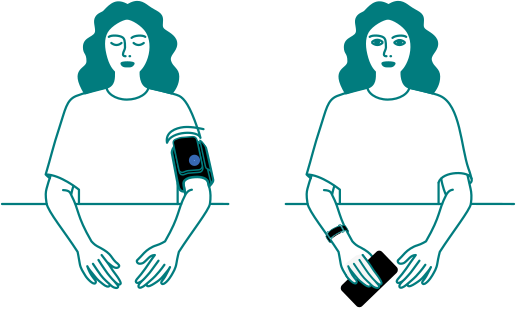
Traditional methods for measuring blood pressure require the use of cuffs. While measuring blood pressure is fairly routine, it’s not typically undertaken on a regular basis. For example, your blood pressure may only be measured once or twice a year during a GP appointment. While there is an argument that some data is better than none, collecting data so infrequently does not give an indicator of overall health and is effectively only a snapshot at a particular time-point.
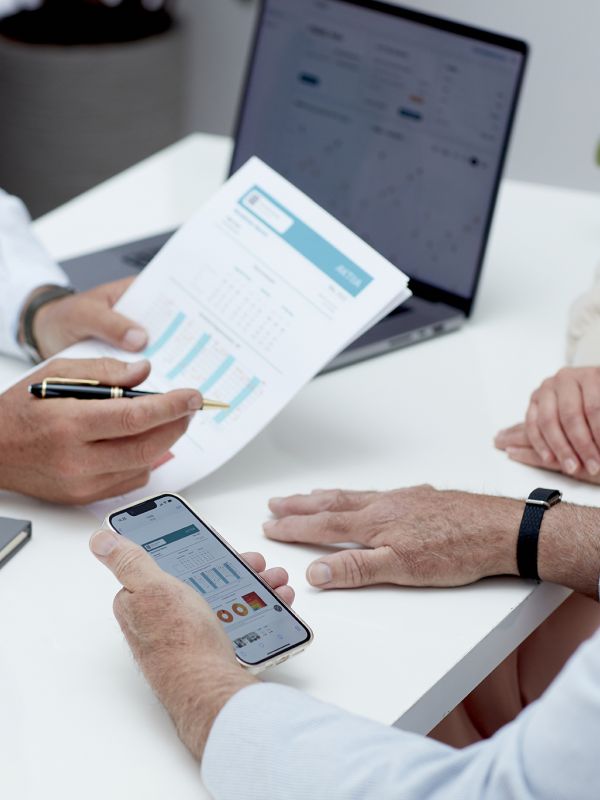
Continual monitoring with 24/7 wearable technology like the Hilo Band, however, offers a comprehensive view because many measurements are taken automatically throughout the day. This can provide key insights into your health, help identify any patterns or trends, and monitor the outcome of any actions you might be taking to manage your blood pressure.
Introducing the Hilo Band and TTR
The Hilo Band is a revolutionary cuffless blood pressure device that continually monitors your blood pressure throughout the day. This allows you to see peaks and troughs in your data, or identify any events that cause significant changes in the values. The Hilo Band also supports time-in-target-range (TTR) monitoring, which is a revolutionary method used to measure the total amount of time that a person’s blood pressure is within the normal range and can be used as a metric to identify risk of adverse cardiovascular events.
Why is this important? Keeping blood pressure within a healthy range lowers the risk of developing heart disease, stroke, kidney failure, aneurysms and other complications.
How the Hilo Band works
The Hilo Band, a wrist-worn device, provides continual blood pressure measurements using optical sensors, eliminating the need for a cuff or interruptions to your daily life. As noted above, there are many benefits to continual monitoring of your blood pressure and the valuable data it yields, including the ability to calculate your blood pressure TTR in real time.
For example, users can easily see patterns and make lifestyle changes to better manage their blood pressure, and GPs and other medical professionals can use the continual data to create more effective treatment strategies, tailored specifically to the patient.
Further study findings on the Hilo Band
A large-scale study, recently published by the Hilo team in the journal Frontiers in Medicine, analysed 2.3 million blood pressure readings from more than 5,000 participants using the Hilo Cuffless monitor. The study found that Time-in-Target-Range (TTR) can be a valuable metric in the management of hypertension.
Importantly, this study also showed that the TTR can be accurately determined using the Hilo Band after continual monitoring has been undertaken for at least 7 days (which leads to a 90% or greater accuracy for hypertension risk classification of a user). While this data could be collected using the traditional cuff-based monitor, the frequency with which data would need to be collected means that in reality this approach would not be feasible, or at least very disruptive for patients.
Interestingly, this study showed that when continual monitoring using the Hilo Bands was used over 15 days as a basis for assessing cardiovascular risk, the traditional cuff-based techniques actually showed a higher error rate: one in four (26%) ambulatory blood pressure monitoring (ABPM) patients and almost half of the patients (45%) using home monitoring schedules were misclassified. While the reasons for this inaccuracy of using the cuff-based approach are unclear, the evidence does support the effectiveness of the Hilo Band for assessing cardiovascular risk of patients.
Protect your heart health with Aktiia’s innovative BP monitoring. See how continual measurement can keep your blood pressure in check. Read more!
Additional survey insights about Hilo
A recent survey published in the Journal of Hypertension indicated that patients strongly prefer continual, cuffless blood pressure monitoring, such as that provided by the Hilo Band. This preference was primarily because patients found the Hilo method to be more comfortable and convenient. Importantly, this study shows the potential for cuffless monitors to improve patient engagement to long-term monitoring and adherence to treatment of hyper- or hypotension, improving patient outcomes in the long-term.
For further reading on heart health and blood pressure management, check out our recommended articles and related clinical studies. If you have any questions or need personalised advice, always consult a qualified healthcare professional.
Disclaimer: This article is for educational purposes only and not medical advice. Consult your GP or qualified healthcare professional before making any changes to your lifestyle. The author and publisher are not responsible for any adverse effects resulting from the use or application of the information presented in this article.
Sources
High Blood Pressure (Hypertension). Healthdirect Australia. https://www.healthdirect.gov.au/high-blood-pressure-hypertension (Accessed October 2025)
How to measure home blood pressure: Recommendations for healthcare professionals and patients. Royal Australian College of General Practitioners. https://www.racgp.org.au/afp/2016/january-february/how-to-measure-home-blood-pressure-recommendations (Accessed October 2025)
Blood pressure and your heart. Heart Foundation. https://www.heartfoundation.org.au/your-heart/blood-pressure-and-your-heart (Accessed October 2025)
N. D. L. Fisher; T. P. Almeida; D. Perruchoud et al. (2014). Optimizing time-in-target-range assessment for blood pressure: insights from a large-scale study with continual cuffless monitoring. Front. Med., 11. https://doi.org/10.3389/fmed.2024.1396962
T. P. De Almeida; D. Perruchoud; J. Alexandre et al. (2024). Survey indicates greater patient preference for Aktiia’s cuffless monitor over traditional ambulatory blood pressure monitor in a cardiac rehabilitation program. J. Hypertension, 42, e73. https://doi.org/10.1097/01.hjh.0001019976.31830.ed